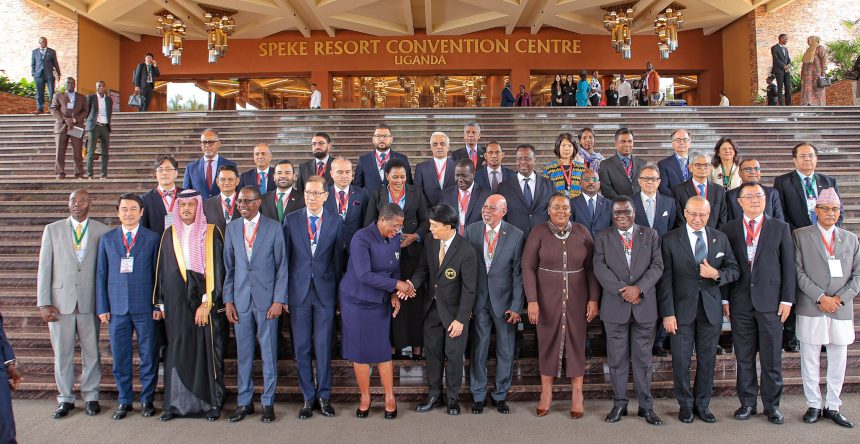
Kampala — At the 63rd Annual Session of the Asian–African Legal Consultative Organisation (AALCO), held this week in Munyonyo, Uganda, leaders from Africa and Asia urged stronger international law to address pressing issues like climate change, trade fairness, and cyber governance.
Key Highlights from AALCO Session
Uganda’s Attorney General, Hon. Kiryowa Kiwanuka, serving as AALCO President for this session, wrapped up five days of discussions focused on reforming global legal frameworks in ways that protect developing countries.
Among the major topics were:
• How climate change disproportionately impacts poorer nations, and what legal obligations richer countries should have under the principle of “common but differentiated responsibilities.”
• The need for fairness in world trade practices that do not leave behind less developed economies.
• Enhancing legal structures around cyberspace, including cybercrime, artificial intelligence, digital infrastructure protection, and responsible state behavior in digital spaces.
New Developments in Cyberspace Law
One of the important achievements of the conference was the presentation of the latest report by Professor Huang Zhixiong, AALCO’s Special Rapporteur on International Law in Cyberspace. The report laid out 15 agreed-principles drafted over several years, covering areas like sovereignty, cybercrime, AI regulation, and emerging technologies. However, delegates stressed that these principles are non-binding — meaning they are not enforceable law yet — and should align with ongoing international efforts under the United Nations.

AALCO’s Broader Role and the Kampala Message
Kiwanuka emphasized that AALCO continues to serve as a bridge: between Asian and African nations, between regional needs and global lawmaking, and between current challenges and future legal frameworks. The attorney general also called for laws that balance economic growth with justice and environmental protection for all nations.

As the session concluded, participants expressed hope that the resolutions from Kampala will be carried back to national governments and translated into stronger, fairer international laws that reflect the needs of both Asia and Africa.