
Museveni and his NRM lost total popularity in 2006 when he extended the presidential term limits. His regime progressed in endless corruption and theft of public funds with no service delivery, militarising all institutions, and arresting opposition figures.
The regime became so unpopular that vote rigging became its only way of survival, and it required a united opposition to bury it.
He changed strategy to literally get out of NRM and use opposition directly or indirectly to keep in power because his party had become so rotten in the eyes of the people. He dressed NRM cadres in opposition colours to win constituencies, which progressed to the presidency itself.
In that format, three figures have secured him the last four terms with support from the opposition.
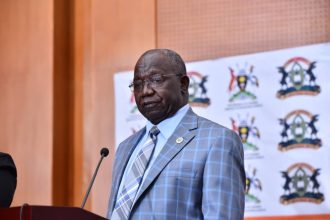
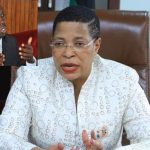
- Norbert Mao.
Much as FDC was the leading opposition party then, DP’s strength in Buganda was unmatched, on top of its youth UYD system that produced logical leaders. To crack it, Museveni positioned Mao at the DP delegates conference, gave him internal support, and he won the party presidency. DP members celebrated because they thought that being a vibrant youth and from the north, Mao would expand the party into other regions. Instead, he started serving the regime by sidelining DP stalwarts in areas where it was strong, especially Kampala. The likes of Lukwago, Kasibante, Kato Lubwama and others were denied party cards, though they won as independents.

In 2011, Mao stood as a divisive candidate, seen as planted to split opposition votes in the north and central regions, which had DP diehards. He helped Museveni win that term by dividing the opposition.
By 2016, Museveni knew the opposition would need a new candidate on the scene. He brought Mbabazi, built around Mao. It was ironic that Mao, who had a strong party in DP, supported Mbabazi, an NRM-leaning independent, and ordered all DP candidates and structures to support him. His target was to weaken Besigye, divide opposition support, and stop disgruntled NRM members from joining the opposition.

On election day, he represented the opposition in NBS studios, and they went ahead to file an electoral petition in court—a feeble case that was designed to lock out Besigye, who was under house arrest, and finally legitimise Museveni’s victory. It worked.
In both terms, Mao played a significant role in bringing the northern region closer to Museveni’s NRM. As a respected northerner, he brokered negotiations with different cultural and political leaders in the region, which culminated in the north regaining confidence in Museveni and pushing opposition out in exchange for political favours and positions.
After helping him win that term, he took DP directly into NRM, where he is now serving as a minister.
But though he managed to hide behind opposition politics in those two terms, by 2021 he was fully exposed as a regime mole. He needed a replacement.
2. Kyagulanyi Ssentamu.
Bobi entered the political scene in 2018, and by 2019 he was initiated into Mao’s previous role.
As a youthful musician, he gained immediate following given that the country by then was desperate for change. Besigye had declared he would not contest again in an election organised by Museveni’s EC. The youth population was very large, and the country was deeply desperate for change.
Bobi rode on the People Power slogan. He castigated political parties as the cause of Ugandans’ suffering, and planned to mobilise people as “people” rather than through political parties, which he described as greedy and all the same.
In 2019, Museveni knew he could not easily control an amorphous movement against him. He knew Bobi had the vigour and following to challenge him but lacked the experience and expertise to challenge an established regime beyond social media noise.
He designed a strategy to starve him of experienced political experts, weaken his strength (the People Power concept), then control him from within.
In 2019, the regime gave Bobi a political party NURP, which later became NUP (to kill the People Power ideology). Along the party, Museveni gave him an SFC security team (removing his foot soldier security), then its administrators—a secretary general, a treasurer, and thereafter a spokesperson (Rubongoya, Katana, and others). This was the beginning of isolating Bobi from experienced political experts. All known experienced opposition politicians who joined from other parties were pushed out, leaving him as an isolated figure that could be followed and cheered like a musician but without a strategic way forward.
The first assignment was to weaken the opposition in Kampala by denying senior MPs party cards. The NRM had failed to win Kampala, and voting trends showed strong opposition support. Serious opposition MPs were denied cards and replaced by political newcomers who were later rejected by voters.
NUP became a strategyless party, and Bobi contested as a strong candidate with many youths following him but without a clear strategy to convert numbers into victory.
The party’s lack of strategy gave Museveni the 2021 term. They failed to build nationwide structures, collect DR forms properly, or file a strong court case against an election that was marked with malpractice.
The same weaknesses granted Museveni the 2026 term. For the first time since 2000, this is the only term Museveni has been sworn in without a court case in the background.
That aside, he now has his “dream parliament” with all strong MPs removed, partly due to NUP card decisions. This house is expected to be worse than the previous one. The opposition has been weakened and needs rebuilding from scratch.
By the end of the 2026 campaigns, Bobi had fulfilled his role, and neither he nor Museveni had demands on each other, hence he was able to travel freely to the USA to rest with his family, leaving Museveni to be sworn in peacefully. He is expected to return and resume social media activity without practical activism.
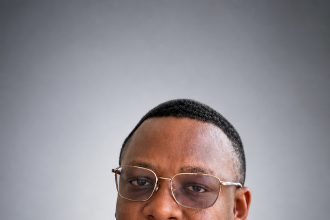
3. Rubongoya.
His background, political and family history will be discussed another day.
He was placed in opposition politics with a mission: to manage, control, monitor, and weaken it from within.
He has played this role effectively. He is seen as the brain behind managing Bobi, directing him toward regime targets while keeping followers engaged.
The NUP constitution gives him significant authority within the party. His position is untouchable and highly influential. Without him, key decisions in the party are difficult to make.
With his insertion into NUP, many experienced leaders were pushed out, while entertainers and newcomers were recruited into party structures.
He acts as a gatekeeper around Bobi, preventing him from engaging with politically experienced individuals or strategic thinkers.
As a trained insider, he identified strong youthful activists and reportedly ensured they were neutralised through arrests or other means. This has left NUP largely populated by social media supporters rather than structured activists.
Rubongoya’s main role has been controlling internal opposition structures, managing party decisions, and ensuring weak opposition coordination.
From within the opposition, he has contributed to weakening organised resistance and fulfilling Museveni’s long-standing goal of a weakened opposition.
With noisy followers, lack of experienced leadership, and weak structures, 2031 will be another continuation of weak opposition, allowing Museveni to extend his rule as citizens continue to suffer.
Can Uganda ever rid itself of moles and fight for true liberation?
Written by Kaweesa kaweesa