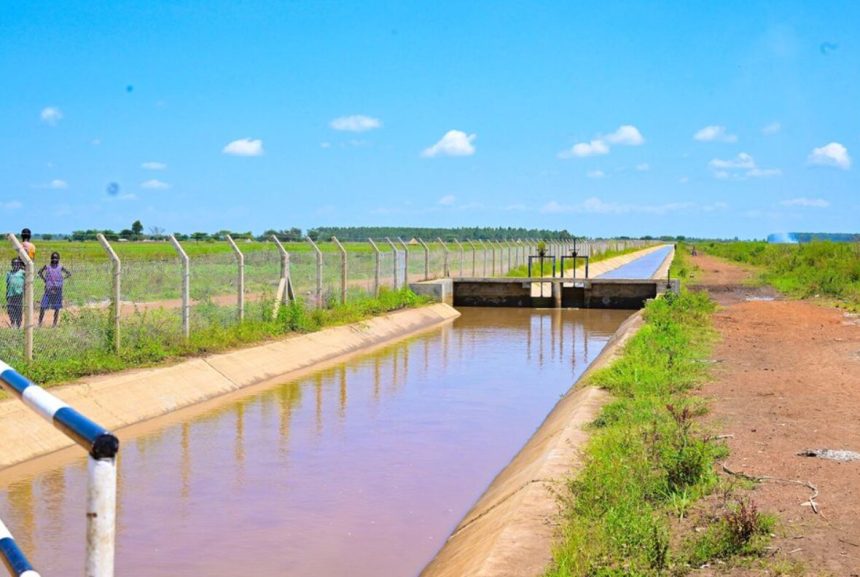
The ownership and management of the Shs71 billion Achomai Irrigation Scheme in Kamutur Sub-county, Bukedea District, have come under scrutiny amid growing concerns from local residents who claim they have little knowledge of the project despite it being presented as a community-driven initiative.
The irrigation scheme, funded by the Government of Uganda through the Ministry of Agriculture, Animal Industry and Fisheries (MAAIF), was commissioned by President Yoweri Museveni on 5th November 2025.
During the commissioning ceremony, the project was hailed as a major step towards transforming agriculture through irrigation, promoting rice cultivation on dry land, and protecting wetlands from degradation.
At the time, government officials described the project as a community-centered intervention aimed at improving agricultural productivity and household incomes in the area.
However, interviews with several residents in Achomai paint a different picture.

Many community members say they were largely unaware of the details surrounding the project and its ownership. Some claim that their involvement was limited to attending the commissioning ceremony after being mobilized to welcome the President.
“Most of us do not know who owns the project or how the community is supposed to benefit from it,” said one resident who requested anonymity.

According to local sources, some individuals who possessed information about the project were reluctant to raise concerns publicly for fear of possible repercussions.
The development has sparked questions about whether the irrigation scheme is genuinely community-owned as initially presented or whether it primarily benefits private interests.
Observers argue that while the project aligns with President Museveni’s vision of transitioning farmers from subsistence agriculture to commercial farming through modern technology and infrastructure, transparency regarding ownership and management remains critical.
“The President was right when he said the Achomai Irrigation Scheme symbolizes the government’s broader strategy of increasing productivity per acre through technology and infrastructure,” said a local resident. “But the key question remains: who owns the land, who controls the irrigation system, and is the community truly benefiting?”
As public interest grows, calls are mounting for authorities to provide clarity on the project’s ownership structure and operational management.
Investigations into the matter are ongoing, with further details expected to emerge regarding the individuals or entities behind the irrigation scheme and the extent of community participation in the project.