
As a two-year climate-smart agriculture intervention approaches completion, farmers in Kagadi District are beginning to see the tangible benefits of a large-scale agroforestry programme that has blended environmental restoration with rural livelihood support.
The Investing in Forests and Protected Areas for Climate-Smart Development (IFPA-CD) initiative, implemented under Uganda’s Ministry of Water and Environment and funded by the World Bank, has been promoting integrated farming systems that combine trees, crops, and livestock across selected refugee-hosting districts in Northern and Western Uganda.
Field implementation in Kagadi has been delivered through a consortium of development partners, including Catholic Relief Services and NIRAS International Consulting Uganda, with technical and community-level implementation support from the Environmental Conservation Trust of Uganda (ECOTRUST), which led field mobilisation and execution in selected settlement districts.
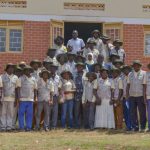
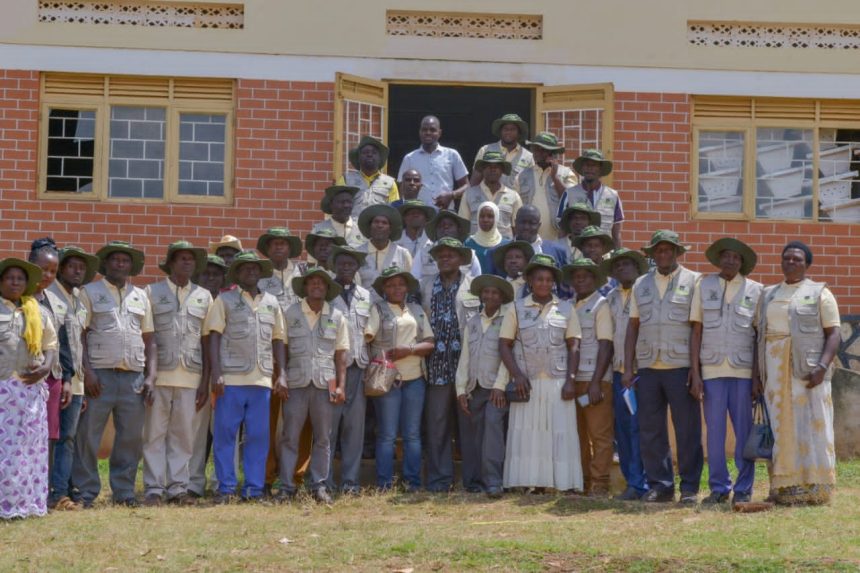
In Kagadi District, more than 20 model farmers across four sub-counties were recently recognised for their outstanding participation in the programme. Each received over 5,000 tree seedlings comprising a mix of indigenous and commercially valuable species, including albizia, Prunus africana, grevillea, terminalia, maesopsis, and mahogany.
Project officers said species selection was guided by ecological suitability, survival rates in the region, and farmer preference, with an emphasis on integrating trees into productive farmland systems rather than treating them as isolated conservation efforts.

According to field teams, the approach has contributed to improved soil fertility, better water retention, and increased farm productivity among participating households.
As part of the programme’s close-out activities, each of the recognised model farmers also received two goats, intended as a complementary livelihood asset to support household income generation.

District leaders said the livestock distribution was designed to reinforce gains from agroforestry, encouraging farmers to view the animals as long-term capital through breeding rather than immediate consumption.
Kagadi has been highlighted as one of the strongest-performing districts under the programme. Out of a target of 7,180 households, the district achieved full coverage, contributing significantly to the national total of over 25,000 farmers reached across implementation areas.
Under the land restoration component, Kagadi also exceeded expectations, with trees planted across approximately 1,420 hectares of degraded land. These efforts are expected to strengthen watershed protection, increase tree cover, and support long-term ecosystem recovery.
A key feature of the programme has been the use of radio-based extension services through the Farmers’ Voice Radio model, delivered via Kibale Kagadi Community Radio (KKCR 91.7 FM). The platform enabled farmers to engage directly with agricultural experts, share challenges, and access practical guidance in local languages.
Farmers say the combination of training, radio engagement, and material support has improved both knowledge and confidence in sustainable farming practices.
District forest officials note that significant portions of forest reserves in Kagadi had been degraded over time, making restoration efforts urgent. The programme’s integrated approach has helped accelerate reforestation while simultaneously offering farmers alternative income sources.
Local authorities have welcomed the results, pointing to increased awareness among communities on the importance of environmental conservation and sustainable land use.
As implementation phases wind down, the initiative leaves behind trained farmers, restored landscapes, and strengthened rural livelihoods positioning agroforestry as a practical pathway for climate resilience in the region.