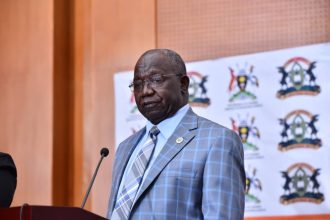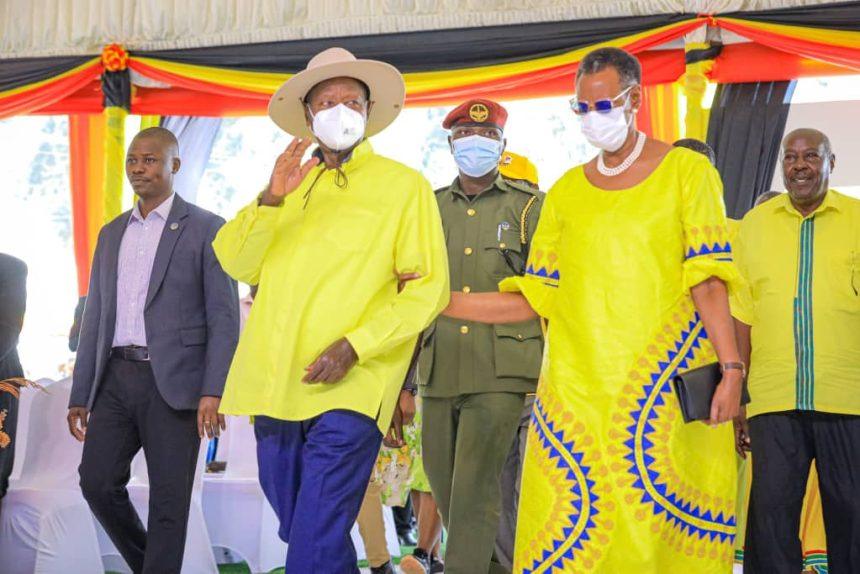
President Yoweri Kaguta Museveni, the NRM presidential flagbearer for the 2026 elections, left supporters stunned on Tuesday, September 23, 2025, after revealing unusual details about his presidential salary. Speaking shortly after his nomination at the Electoral Commission headquarters, Museveni claimed that most of his salary ends up with the ruling NRM party and his wife, First Lady Janet Museveni.
“Do you know how much salary I earn?” Museveni asked. “They pay me UGX 3.6 million. I then deduct 20% for the NRM, and Mama Janet then remains with UGX 2.7 million to her account.”
The comment drew surprise and laughter from the crowd, with many questioning whether the statement was meant to highlight his humility or simply a campaign gimmick. Museveni stressed that he refused to increase his salary as president because civil servants, including teachers and health workers, still earn very little.
The salary remark came as Museveni sought to position himself as a leader who has made sacrifices for the country. He told supporters that he could not, in good conscience, raise his own pay while ordinary Ugandans struggled with low wages.
This unusual disclosure added to his broader campaign themes, where he portrayed himself as both a servant leader and a father figure to the nation.

Earlier in his post-nomination speech, Museveni declared that Uganda is no longer a least developed country but has moved into the lower-middle-income bracket, as classified by the World Bank.
“Uganda has moved forward. The Gen Z are my supporters. They are my comrades,” he said, pointing to decades of transformation since he took power in 1986.

He reminded Ugandans that areas once dominated by colonial coffee estates are now modern residential zones, a change he credits to his government’s economic policies.
While NRM supporters praised Museveni for his “sacrifice” and pushed hashtags such as #ProtectingTheGains, critics mocked the salary claim, with some suggesting it was out of touch with the reality of the country’s high cost of living. Others dismissed his declaration of middle-income status as political talk ahead of the elections.
Museveni faces a crowded field of more than 50 presidential aspirants, including nearly 10 from Generation Z, who are challenging his four-decade hold on power. Political analysts say his salary remarks and focus on middle-income status are carefully timed to present him as a modest leader who has delivered economic progress.
But with Uganda still ranked low on the Human Development Index and youth unemployment remaining high, it is unclear whether such campaign messages will resonate with younger voters hungry for change.