Thousands of teachers across Uganda are set to receive a long-awaited salary boost beginning July 1, 2026, following government approval of a new pay structure targeting arts teachers, primary school educators, and school administrators.
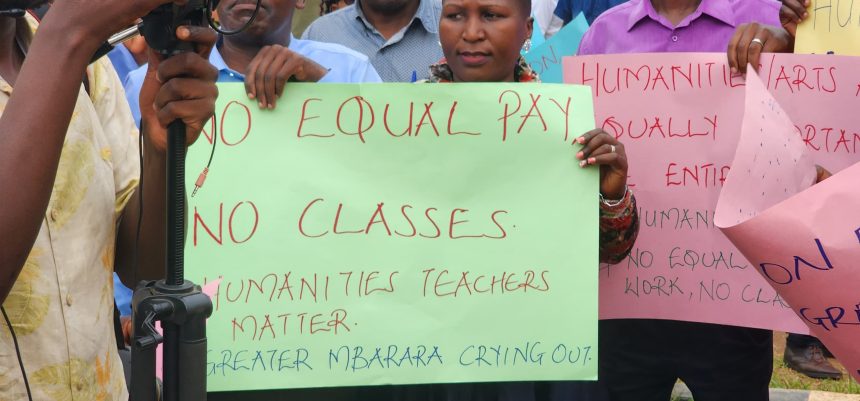
The development brings relief to teachers who have spent years without a pay rise, with some previously resorting to strikes and demonstrations to press for better pay and improved working conditions.
Under the new structure, significant adjustments have been made across various levels of the education sector. Headteachers in government primary schools will now earn Shs1.5 million per month, up from Shs980,000, while deputy headteachers’ salaries will rise from about Shs775,000 to Shs1.3 million.
At the lower level, education assistants will see their salaries increase from Shs449,000 to Shs700,000, while senior education assistants will earn approximately Shs727,000, up from Shs602,000.
In the secondary education sector, arts teachers and administrators will also benefit. A headteacher with an arts degree will now earn up to Shs3.5 million per month, up from between Shs2.2 million and Shs2.3 million. Deputy headteachers and deputy principals will see their salaries increase from about Shs1.6–1.7 million to Shs2.1 million. Education officers’ pay will rise to around Shs1.2 million, while assistant education officers will earn up to Shs1.3 million from about Shs700,000.

The salary enhancement is expected to benefit a total of 156,407 teachers nationwide. Of these, 132,278 are at the primary level, including 8,226 headteachers, 6,978 deputy headteachers, 11,293 senior education assistants, and 105,781 education assistants. At the post-primary level, 24,129 teachers and tutors will benefit, including 1,097 headteachers and principals, 1,057 deputies, and 21,975 classroom teachers and tutors.
Despite the increment, disparities remain, as arts teachers will continue to earn less than their science counterparts, whose salaries were enhanced earlier under a separate government policy.

The pay rise comes after more than a decade of stagnation for many teachers, a period during which educators faced mounting financial pressure, with some taking loans to survive while others exited the profession altogether.
Education stakeholders say the increment could improve morale and service delivery in schools, although calls remain for government to harmonise salaries across all teaching disciplines to eliminate long-standing inequalities in the sector.