An Australian radical philosopher, Eugene Ehrlich, once urged the world to disregard and distance itself from government-enacted laws, suggesting instead that communities already have their own laws shaped by daily life, what he termed “living law.” Of course, this may not be universally applicable and should be embraced only with moderation. In any case, the authority to enact laws is vested in the state, especially when viewed from the positive school of thought, and within the Ugandan context.
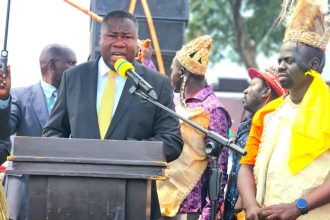
There is sufficient evidence to suggest that the Bamasaaba community often struggles to trust one another. This was clearly seen during the election of Umukuka I, His Highness Wilson Wamimbi. Those present at the time ensured that someone from South Bugisu was appointed to oversee the election process. Hon. Irene Manghali, then Deputy RDC of Manafwa, was quickly asked to manage the elections since the two candidates came from South and North Bugisu respectively. The parties involved could not agree on anyone from North Bugisu to preside over the polls, so Bishop Gimadu and Hon. Manghali were brought in to jointly manage the process.
The Bamasaaba are one people and should not allow themselves to be divided along clan lines. While it is true that we cannot separate ourselves from our clans, we should not let them become a source of division.
What creates unity in any community is not merely living together but being bound by a common purpose or idea. If cohabitation were the ultimate measure of unity, then husbands and wives would never have disagreements. For instance, a witchdoctor in Bududa may share stronger ties with another in Busoga than with his immediate neighbour because they share a unifying belief system.
There are deliberate efforts by some Bamasaaba to sever the umbilical cord that has long united us as a community. It is well established that the Bamasaaba originate from several clans spread across the districts of Bududa, Bulambuli, Namisindwa, Mbale City, and Manafwa, according to local government records.

However, the ongoing fragmentation of the Bamasaaba into clans such as Mwambu, Wanale, and Mubuya could in the long run become counterproductive. Some of these emerging groups may later demand cultural independence and their own leaders. While I have no issue with clan chairpersons such as Mr. Mayatsa, who was elected as chairman of the Wanale clan amid tension and opposition from several sub-clan leaders, I foresee challenges ahead. The Buhalasi clan, for instance, also elected Dr. Wesonga as their chairman. The problem will arise when these leaders begin aspiring to be Umukuka (cultural heads) for their respective factions, seeking government facilitation and recognition.

The introduction of cultural leadership in Uganda was never meant to create division but to foster unity. However, the current model must be nurtured and respected if it is to achieve its intended goals.
Recently, while attending an Alternative Justice System training organized by the Chief Justice in Munyonyo, His Lordship Hon. Justice Owiny-Dollo reminded participants that the Acholi region alone had over 20 clan chairpersons in attendance, nearly half of all participants. He noted that many of them were in conflict with their king back home, hence the need to appreciate the importance of mediation and reconciliation.
Cultural or traditional institutions should serve as vanguards of unity within their communities and must always work toward peace and cohesion. Unfortunately, some groups seem more inclined to follow Ehrlich’s philosophy, ignoring state laws and creating their own, rather than strengthening lawful structures of governance.
The Bamasaaba must therefore reject any obstacle to their unity, particularly the divisive clauses in the Inzu Ya Masaba constitution. We are not vested with the authority to enact our own laws as a community but are instead guided by the state’s enabling laws on customs and cultural practices.
The writer is a lawyer and spokesperson of the Bugisu Cultural Institution.