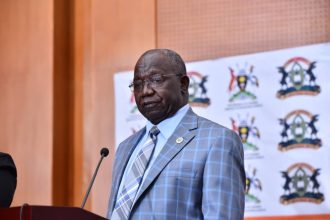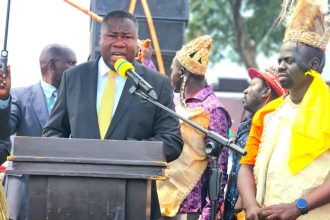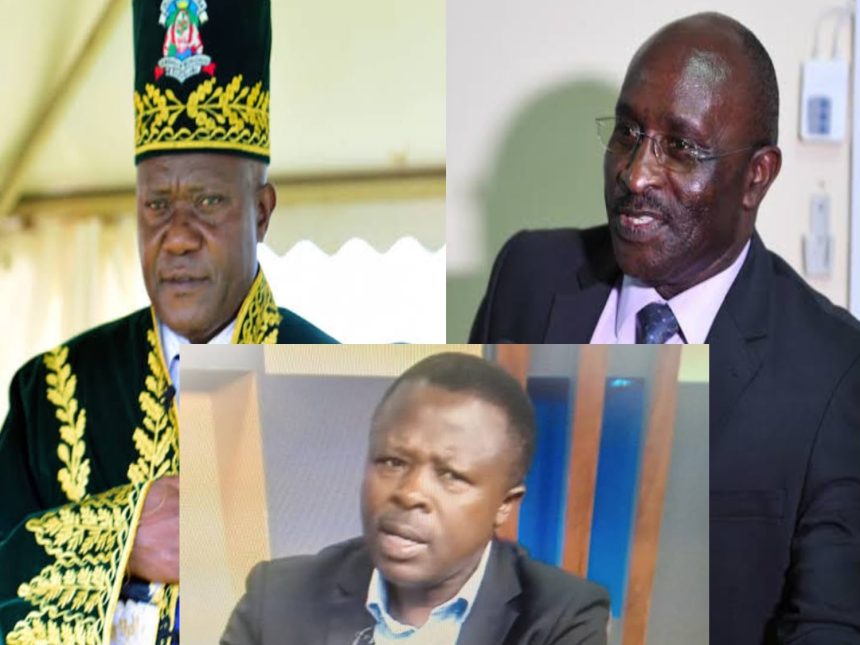
The Bugisu Cultural Institution has strongly rejected statements made by former Ambassador to Somalia, Hon. Simon Mulongo, accusing him of attempting to divide the Bamasaaba people into sub-tribes and promoting what it described as legally unfounded cultural interpretations.
Speaking on behalf of the institution, spokesperson Steven Masiga said Hon. Mulongo raised two main issues concerning the tenure of the Umukuka and proposals suggesting that the Inzu ya Masaba could be recast as the “Umukuka of Bugisu.”
While acknowledging that Mulongo raises questions relating to governance of cultural institutions, Masiga said the institution fundamentally disagrees with the entirety of his argument, describing it as biased and lacking legal grounding.
Masiga emphasized that cultural and traditional leadership in Uganda is a creation of the 1995 Constitution, noting that such institutions were weakened in the 1960s when governments distanced themselves from traditional leadership structures. He said cultural institutions in Bugisu and across Uganda are legally recognised and can only be altered or abolished through the law.
“The current cultural and traditional leadership in Uganda is a creature of the Constitution. What is given by law can only be taken away by law,” Masiga said.

He cited constitutional provisions, including Article 79 on law-making authority, stating that Parliament and local governments are the legitimate bodies empowered to enact laws. He questioned the legal basis of what he referred to as the “Inzu ya Masaba constitution,” arguing that it lacks statutory backing.
Masiga, a former Constituent Assembly delegate, expressed disappointment that Mulongo—who also participated in the drafting of the 1995 Constitution—was now, in his view, promoting positions that undermine the same constitutional framework he helped establish.

He said Bugisu is legally recognised as a cultural institution under the current constitutional order and not a collection of competing tribal formations.
“Hon. Mulongo should promote constitutionalism rather than advancing structures not grounded in Ugandan law,” he said.
Masiga further argued that Uganda’s legal system distinguishes between lex lata (the law as it is) and lex ferenda (the law as it ought to be), stressing that only enacted law has legal force.
He maintained that cultural identity and leadership structures must be grounded in existing legal frameworks rather than personal or political interpretations.
The Bugisu Cultural Institution spokesperson called on Hon. Mulongo to retract his statements and issue a formal apology to the Government, the Umukuka, and the Bamasaaba people for allegedly inciting divisions and calling for resistance against the cultural leadership.
He also cautioned against commenting on matters currently before court, citing Article 28 of the Constitution, which guarantees the right to a fair hearing and discourages speculative public commentary on ongoing legal proceedings.
Masiga reaffirmed the institution’s commitment to defending both the Constitution and the legitimacy of the Umukuka leadership structure, warning against attempts to undermine unity within the Bamasaaba community.