The Ugandan government is considering a new strategy to encourage agroecology and organic farming in the country. This initiative aims to safeguard the interests of smallholder farmers and both the local and export markets for agricultural products. This development is in response to the growing demand for stricter control of chemical usage in agriculture, particularly the use of substandard and toxic substances.
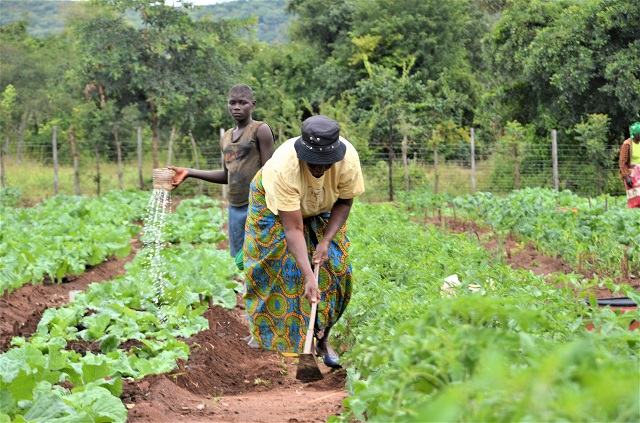
Agroecology is an agricultural practice that emphasizes the collaboration between humans, animals, and plants to preserve soil health and maintain crop production without relying on artificial inputs. In addition to producing safer food for human consumption, agroecology reduces the cost of production, making it more manageable for small-scale farmers, as noted by experts.
According to Sunday Bob George, a Senior Agricultural Officer at the Ministry of Agriculture, Animal Industry and Fisheries, the strategy is currently in the process of being reviewed, with various government agencies providing their input. The initial draft of the strategy was prepared by Professor GS Tenywa from Makerere University in collaboration with experts from non-governmental organizations and government departments.
Sunday explained that the primary goal of the strategy is to outline and enforce the roles of all stakeholders in the agricultural value chain, including farmers, input suppliers, traders, and consumers. He made these remarks at the commencement of the Uganda Agroecology Week of Action 2023, organized by PELUM Uganda.
The strategy is anticipated to play a significant role in combating the effects of climate change, as stated by the PELUM (Participatory Ecological Land Use Management) Association, a regional network comprising 250 civil society organizations across 12 countries, including Uganda. Dr. Christopher Kyeswa, the Chairperson of Pelum’s Board, emphasized that increased government investment in agroecology and organic farming will contribute to the fight against climate change due to the sustainable practices it promotes among farmers.

Elizabeth Kabakoyo, an agroecological farmer and owner of GLOWISH Agro Solution, a company specializing in the production of organic fertilizers and the promotion of indigenous farming systems, urged the government to find ways to reduce the use of toxic chemicals by Ugandan farmers. She argued that these chemicals not only harm the soil but also impact the marketability of Ugandan agricultural products. She also called for the establishment of organic food markets in Uganda and a special certification process by the Uganda National Bureau of Standards to authenticate organic products, as they currently lack the UNBS stamp.
Efforts are also underway to prevent the export of agricultural inputs prohibited in the producing countries to Africa. HUMUNDI, previously known as SOS Faim, a Belgian development NGO focused on combatting hunger and poverty in Africa and Latin America, is leading the fight against the production and export of hazardous agricultural inputs to low-developed countries. Ben Akure, HUMUNDI Uganda Program Coordinator, reported that their efforts have yielded results, with Belgium and France agreeing to halt the export of chemicals that have been banned in the European Union to less developed nations.

The Uganda Agroecology Week of Action 2023, scheduled to take place at Hotel Africana starting on Tuesday, will feature exhibitions showcasing organically grown crops, organic pesticides and fertilizers, and indigenous food crops from various regions of the country. The event will also facilitate interactions between experts, financiers, farmers, input suppliers, and government agency representatives.
These celebrations align with World Food Day, which was observed on October 16 under the theme, ‘Water is Life, Water is Food. Leave No One Behind.’