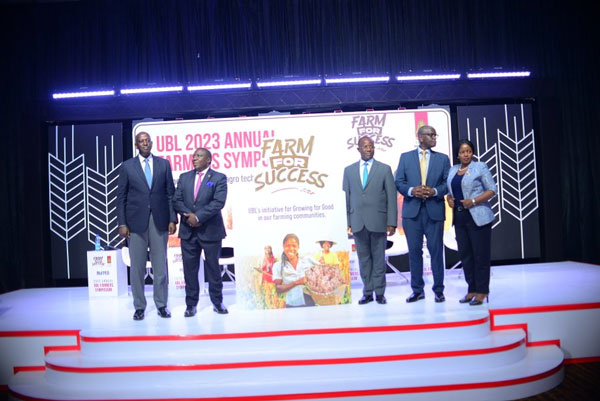
The Minister of State for Agriculture, Fred Kyakulaga, has urged farmers to take advantage of the growing demand in the brewery market by increasing their production of barley, sorghum, and corn. Kyakulaga made this statement during the second Farmers’ Symposium, organized by Uganda Breweries Limited (UBL).
He emphasized the importance of companies like UBL that add value to agricultural products and their role in helping the government address the long-standing challenge of market access for farmers in the country.
During the event, UBL unveiled its plans to expand the number of farmers participating in the “Farm for Success” program, increasing the count from 35,000 to 50,000. Under this initiative, UBL aims to source up to 100% of its raw materials from Ugandan farmers by 2030. This move is expected to significantly boost the demand for various agricultural products, with anticipated increases in barley from 8,000 to 13,000 tonnes, sorghum from 15,000 to 25,000 tonnes, and maize from 18,000 to 20,000 tonnes.
The introduction of excise concessions for beer made from locally sourced raw materials by the government has led to a gradual increase in UBL’s payments to farmers, rising from 14 billion shillings in 2011 to 52 billion shillings recorded last year. The “Farm for Success” program is expected to further elevate these payments to over 80 billion shillings in the next five years.
Andrew Kilonzo, the Managing Director of UBL, announced that the program will actively involve more women and persons with disabilities (PWDs) in the supply chain, with the goal of having up to 60% of suppliers from these two categories.

Francis Nyeko, a barley farmer from Agoro in northern Uganda who has supplied UBL since 2011, expressed his gratitude for the support provided by UBL. He noted that UBL not only offers a consistent and sustainable market but also provides fixed prices for their produce, bringing stability and prosperity to farmers.
“This program is a game-changer for our livelihoods in the village, as it assures us of a stable market with fixed prices. The increased demand challenges us to do more on the farm.”

Nyeko also acknowledged the government’s support through extension services and research from the National Agricultural Research Organization (NARO) while raising awareness of challenges faced by farmers, including high-interest rates on loans and the adverse impacts of climate change on their seasonal farming activities.