Uganda’s property market experienced a shift in dynamics during 2023, influenced by the country’s economic performance and various sectoral trends. Office developments, initially slated for 2023, faced delays with completion dates now extended to 2024/2025.
Uganda’s economy, as reported by the Uganda Bureau of Statistics, demonstrated improvement in the second half of 2023, boasting a growth rate of 5.2 percent compared to 4.6 percent in the previous fiscal year. The services sector emerged as the leading contributor to the Gross Domestic Product (GDP) at 42.4 percent, followed by manufacturing at 26 percent and agriculture at 23 percent.
In the first half of 2023, inflation witnessed a decline, attributed to factors such as lower international commodity prices, favorable crop harvests, stable exchange rates, and prudent fiscal and monetary policies.
The positive economic trajectory was sustained by the recovery in tourism, export diversification, agro-industrialization, and investments in the oil and gas sector. This upward trend led to increased household incomes, consequently boosting consumer spending in the property market and other sectors.
According to a market performance report by Knight Frank, a prominent property company, the second half of 2023 witnessed strengthened economic activity, resulting in heightened demand across commercial, residential, and industrial spaces.

Residential Sector
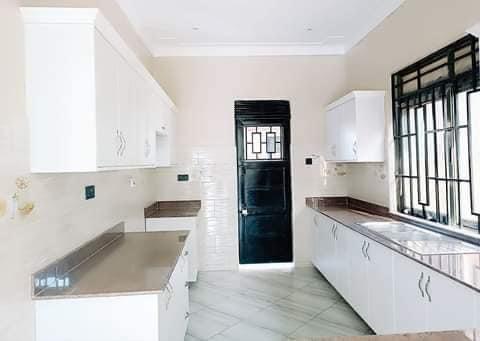
In the prime residential market, encompassing areas like Kololo, Nakasero, and Naguru, a six percent year-on-year growth was observed between June and December 2023. The report noted a rise in average monthly rents for two-bedroom and three-bedroom apartments. The preference for apartment living in these areas was attributed to expatriates unable to find standalone houses within their budget and a growing inclination towards community living.

Prime suburbs, including Muyenga, Buziga, and Munyonyo, experienced increased construction activity, expanding the catchment area for prime residential demand. This shift was welcomed as it elevated the standards of residential stock for sale and rent.
In the Pipeline
The prime residential pipeline remains active, with approximately 600 new units expected in Nakasero, Kololo, and Naguru in the next two years, reflecting a 14 percent increase in pipeline activity compared to the second half of 2022.
Condominiums and Office Space
Demand for condominiums within a 10-12km radius from the city center surged in the second half of 2023. Meanwhile, Grade A prime office space witnessed a 10 percent year-on-year increase in demand. The report highlighted a shift in office space preferences, with newer entrants in sectors like renewable energy and lottery companies. However, delayed office developments were reported, with completion dates pushed to 2024/2025 due to various challenges.
Commercial Sector
The commercial sector experienced growth in turnover, occupancy, and footfall performance during the second half of 2023. New retailers, including Strat Bridal and Oak Café, contributed to this healthy performance. However, the emergence of international and regional retailers was impeded by stringent testing requirements imposed by the Uganda National Bureau of Standards.
Manufacturing Space
Rental rates for manufacturing space remained stable in the second half of 2023, with demand focused on areas like Bweyogerere, Namanve, and Kawempe. Industrial players, particularly in the automotive, manufacturing, and pharmaceutical sectors, expressed a preference for purchasing their own premises.
In the Pipeline
Pipeline developments for industrial spaces continued, with over 40,000sqm of warehouse expected on the market in 2024. Demand for industrial space is predominantly driven by agro-processing, renewable energy, construction, cold storage, and technology sectors.