


After four years of lobbying for financial relief following the COVID-19 pandemic, the Government has set aside Ugx 20 billion for private school teachers across Uganda. This fund, which will be distributed starting in July 2024, fulfills a promise made by President Yoweri Museveni during the lockdowns that left many schools closed and teachers without income.
The private teachers’ fund is part of a larger Ugx 100 billion fund approved by Parliament last week within the Ugx 72 trillion budget for the 2024/2025 financial year. MPs described this fund as essential for boosting the household incomes of teachers who faced financial hardships during the pandemic. It will also help them develop small businesses to supplement their modest teaching salaries.
Finance Minister Matia Kasaija noted that private teachers could also access funds through the Parish Development Model (PDM) program, which was launched by President Museveni in February 2022. The PDM program includes a Ugx 1 trillion fund, of which Ugx 20 billion will go to private school teachers’ Saccos. These funds will be managed by the Micro-Finance Support Centre (MSC), and private teachers’ Saccos will apply directly to MSC for the money.
Paul Etiang, the national chairperson of the National Private School Teachers’ Association (NAPSTA), welcomed the development, expressing gratitude to the Government for fulfilling its promise. He noted that many teachers were severely affected by the pandemic, having lost their jobs when schools closed. Etiang assured that the funds would provide much-needed relief and encouraged his colleagues to take advantage of this opportunity.
During the COVID-19 pandemic, many teachers turned to other jobs such as brick-making, riding boda bodas, and running food stalls to make ends meet. Unlike teachers in government-aided schools who continued to receive their salaries, private school teachers faced significant financial difficulties.
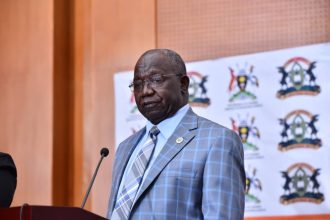
Mudi Kangave, general secretary of the Coalition of Private School Teachers Associations and Unions (CPSTA&U) and national chairperson of the Private Teacher’s Platform Uganda (PTPU), also welcomed the allocation. He emphasized that the criteria for receiving the funds should be limited to active teachers with valid contracts and registered practicing certificates. Kangave argued that it would be unfair for those who left the profession years ago to benefit from the fund.
He also stressed that teachers already on the government payroll should not access the Ugx 20 billion fund, as they continued to receive salaries during the lockdown. The fund is meant to support those who were directly impacted by the pandemic and have since struggled financially.

To access the fund, teachers must be registered with Saccos, as MSC does not provide money to individuals. This requirement aims to ensure proper management and accountability of the funds.
The delay in accessing these funds has been attributed to disorganization among private school associations. First Lady and Minister for Education and Sports, Mrs. Janet Museveni, explained that disagreements within these associations had hindered the process. Despite multiple engagements, the groups failed to agree on how to manage the funds.
However, the government facilitated the establishment of NAPSTA to provide a unified representation for private school teachers. This step aimed to streamline the process and ensure that the funds reach those in need.
In a letter dated August 4, 2023, Finance Minister Matia Kasaija assured the First Lady that the funds would be managed by MSC to ensure proper accountability. Kasaija acknowledged the significant impact of the pandemic on private school teachers and emphasized the need to fulfill the Presidential Pledge.
John Peter Mujuni, executive director of MSC, confirmed several meetings with finance and education ministries and teachers regarding the Ugx 20 billion fund. He stated that MSC is ready to manage the funds and facilitate teachers’ access to them, drawing on their experience with similar programs like Emyooga.
Mujuni mentioned that if the funds are to be part of the Emyooga program, further consultations would be needed to potentially include teachers as a new category of recipients. The Emyooga program currently targets 18 categories, including boda boda riders, taxi drivers, restaurant operators, and others.








Thanks for the information but what about teachers’ who got money in PDM and Emyooga will they access that money?