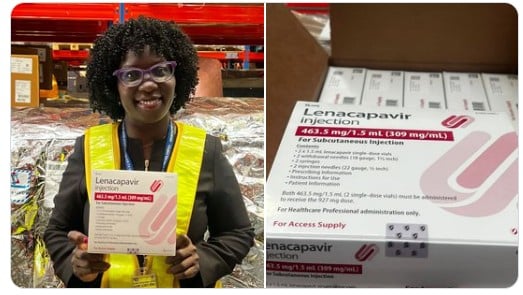
KAMPALA, Uganda — Uganda has received its first consignment of 19,200 doses of Lenacapavir, a long-acting HIV prevention drug administered twice a year, marking a significant milestone in the country’s fight against HIV/AIDS.
The shipment, supported by the Global Fund, arrived on Tuesday, February 24. According to the Ministry of Health, the doses will be distributed to high-burden and high-incidence districts beginning March 2026 as part of efforts to curb new HIV infections.
In a statement issued on X (formerly Twitter), the Ministry confirmed the arrival of the consignment and noted that the injectable drug is designed for individuals at substantial risk of acquiring HIV.
Lenacapavir, developed by US-based pharmaceutical company Gilead Sciences, has demonstrated more than 99 percent effectiveness in preventing HIV infections among high-risk populations in clinical trials.
The Ministry of Health previously indicated that the initial doses would be prioritised for high-risk groups, including young women, pregnant and breastfeeding mothers, and key populations disproportionately affected by HIV.

Uganda is among the top ten high-burden countries selected to access the injectable through support from the US President’s Emergency Plan for AIDS Relief (PEPFAR) and the Global Fund. The rollout forms part of a broader United States-backed initiative aimed at accelerating HIV prevention efforts in heavily affected countries.
According to the Uganda AIDS Commission, by late 2024 an estimated 1.5 million people were living with HIV in Uganda, with approximately 730 new infections recorded weekly.

While oral pre-exposure prophylaxis (PrEP) remains available, health experts say the twice-yearly injection could significantly improve adherence, particularly among young women and other vulnerable groups who struggle with daily medication.
The US government and the Global Fund are co-financing an advanced market commitment to make the drug accessible to up to two million people across high-burden countries by 2028.
During last year’s rollout announcement, Dr Hudson Balidawa, a senior official overseeing Global Fund HIV investments, said that once authorised by the National Drug Authority, the drug would be distributed through public HIV prevention programmes and made available to private-sector clinics, allowing individuals who can afford it to access the medication directly.
He also noted that demand is expected to exceed initial projections. Although the government initially budgeted doses for 17,000 people this year, recent assessments suggest that up to 67,000 individuals could benefit from the injectable drug.
Health officials have clarified that Lenacapavir is not a cure for HIV or AIDS. Instead, it is a preventive medication administered every six months to HIV-negative individuals at substantial risk, significantly reducing their chances of acquiring the virus.