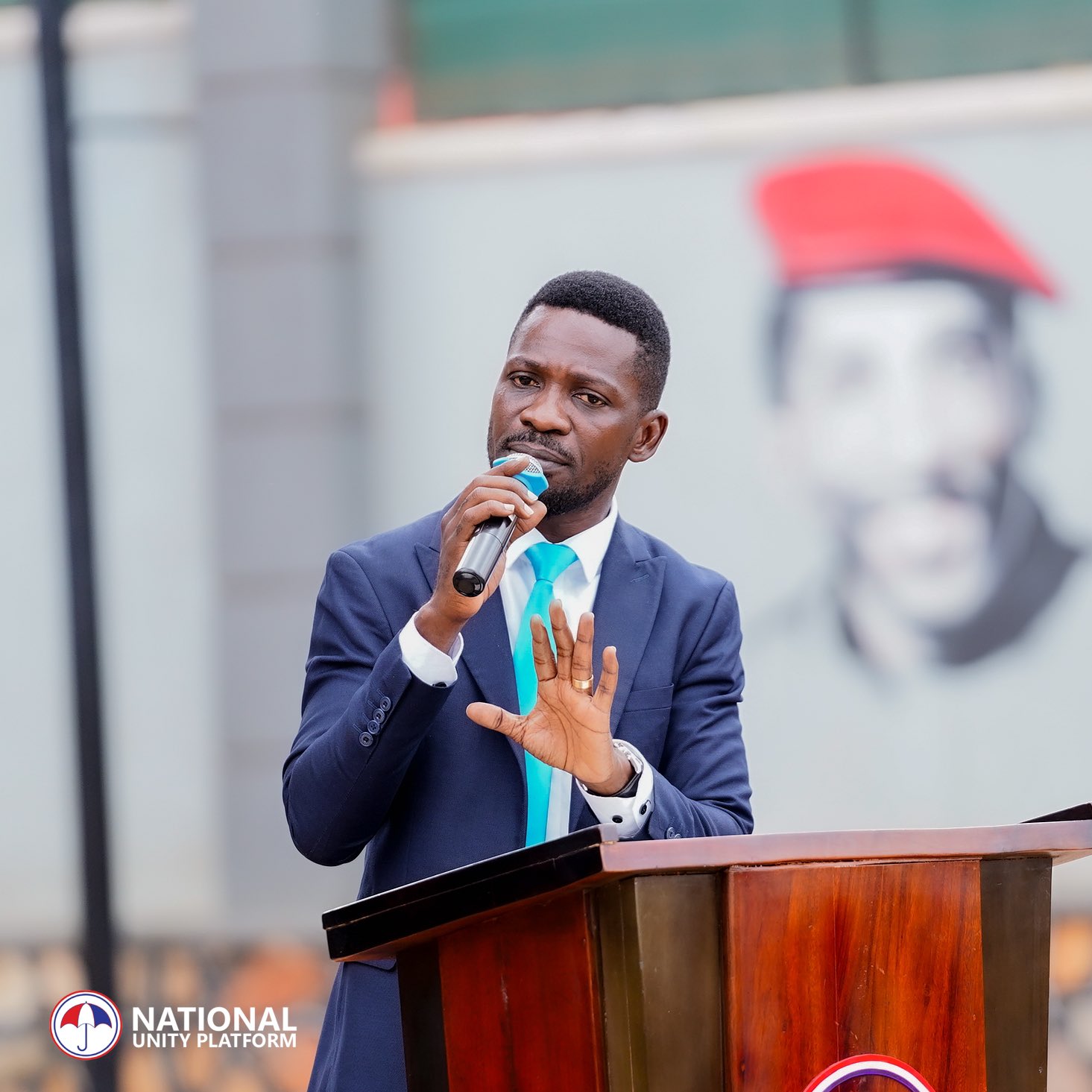
National Unity Platform President, Robert Kyagulanyi, has no kind words for President Yoweri Museveni, accusing him of destroying Uganda’s once-thriving coffee sector. Kyagulanyi says that Museveni’s government has done more harm than good and now seems determined to push the coffee industry even deeper into trouble.
He began by expressing disbelief at how President Museveni, in power since 1986, recently boasted about reviving the coffee sector through Operation Wealth Creation.
Kyagulanyi called this misleading, pointing out that Operation Wealth Creation is run by Museveni’s own family and heavily funded, while the Uganda Coffee Development Authority (UCDA), which farmers rely on, has often been sidelined. According to Kyagulanyi, Museveni’s government claims credit for any success but is quick to blame others for failures, a case of “praising the cow, yet starving it.”
Kyagulanyi reminded the public of the days when the Coffee Marketing Board and cooperative societies supported farmers across the country. But when Museveni came to power, instead of fixing what was broken, he chose to privatize, selling valuable assets cheaply. “It was like selling the family cow for a pittance,” he said, stressing that the government’s actions have left coffee farmers worse off. Many of these assets, Kyagulanyi claims, ended up in the hands of Museveni’s close allies, while farmers were left to fend for themselves.
For nearly four decades, Kyagulanyi argues, the coffee industry has suffered from neglect. The UCDA, established in 1991, only had a small budget from a 1% export levy for years. It wasn’t until 2013 that any significant investment was made, and even that was short-lived, plagued by corruption. Instead of farmers receiving proper support, Kyagulanyi says that coffee seedlings were handed out carelessly, like “giving seeds to the wind,” often ending up in the hands of people who let them wither.

He also criticized Museveni’s recent talk about adding value to coffee, saying it is too little, too late. If the government had supported coffee processing in the 1980s, Uganda could be competing with the world’s best brands today. Instead, the president sold off vital facilities, leaving the country far behind. “You can’t expect to plant thorns and harvest grapes,” Kyagulanyi remarked, calling it a lost opportunity that still haunts the nation.
Kyagulanyi questioned the decision to merge the UCDA with the Ministry of Agriculture, a ministry he says has failed in managing several other key sectors. He compared it to “putting a hungry cat in charge of a fish market,” warning that coffee farmers might suffer more if the merger goes through. The Ministry’s history, he argued, is full of failed promises, and placing coffee under its care could be disastrous.

Instead of listening to the people who make a living from coffee, Kyagulanyi believes the government has tried to silence them. He called for more accountability and respect for the opinions of key stakeholders, like those leading successful initiatives in the Buganda Kingdom and other coffee-growing regions. According to him, a good government would engage with these groups instead of making decisions behind closed doors.
Kyagulanyi also highlighted the wastefulness of Museveni’s government, saying that while the president talks about efficiency, his administration has created a bloated public service with unnecessary roles and duplicated functions. “Too many cooks spoil the broth,” he said, arguing that taxpayers’ money is being wasted on a government that struggles to deliver basic services.
In the end, Kyagulanyi insisted that the UCDA is a crucial part of Uganda’s coffee industry and should not be merged without careful thought. He urged Museveni to remember that “a stitch in time saves nine,” warning that the wrong decisions today could have painful consequences for millions of Ugandan coffee farmers in the future.