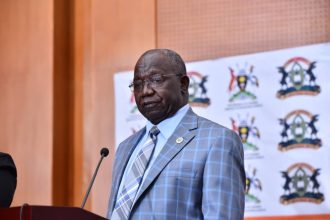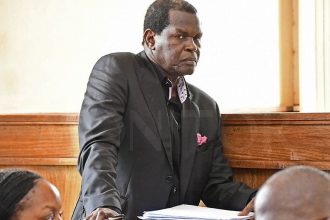
Ugandan radio personality James Onen, widely known as Fatboy, recently sparked controversy with a provocative claim. In a fiery social media post, Onen argued that the moral and sexual conduct of activists—both at home and abroad—has diluted their focus on fighting for political freedom.
The media personality wondered who is going to fight for Uganda’s when the people who gave themselves this mandate are busy enjoying each other’s goodies and yet after weaponize this against themselves.
“Sex killed political activism in Uganda. The people fighting for our freedom both home and abroad are too horny. They should abstain from sex and fight for Uganda. If you’re too busy eating each other and other people, then beefing with each other afterwards, who will fight for us? We are doomed,” Fatboy wrote on his X page.
His comments have ignited a heated debate about accountability, personal ethics, and the credibility of Uganda’s embattled pro-democracy movement.
Onen’s critique hinges on the idea that sexual entanglements and interpersonal drama among activists have replaced disciplined resistance. He suggests that the “horniness” of freedom fighters has led to infighting, broken alliances, and a loss of public trust.

Apparently, there has been an outburst amongst the political Activists’ circles all centering around sex.
Stella Nyanzi vs. Kakwenza Rukira:

The recent public feud between exiled feminist scholar Dr. Stella Nyanzi and satirical novelist Kakwenza Rukirabashaija exemplifies Onen’s concerns. Nyanzi, a fierce critic of President Yoweri Museveni, accused Rukira—who fled Uganda in 2022 after alleged torture—of serial infidelity, claiming he abandoned his legally married wife to pursue multiple relationships abroad.
“How can you champion justice while exploiting women?” Nyanzi charged in a viral Twitter thread, accusing Rukira of hypocrisy.
Rukira, known for his anti-regime novels, has denied the allegations, calling them a smear campaign. However, the scandal has polarized supporters. Some argue that personal failings shouldn’t negate Rukira’s activism, while others insist that accountability is non-negotiable for those demanding ethical governance.
AGORA ACTIVISTS:
The controversy extends beyond Nyanzi and Rukira. Anthony Natif and Agatha Atuhaire, prominent figures in the diaspora-based AGORA political movement, recently faced backlash after their intimate affair became public. Natif, AGORA’s leader, and Atuhaire, a vocal activist, were accused of prioritizing their relationship over organizational duties, leading to internal strife. Critics allege the affair created factions within AGORA, with some members resigning over perceived nepotism and unprofessionalism.
While Natif and Atuhaire have dismissed claims of misconduct, the scandal has raised questions about power dynamics and transparency within activist groups.
“How can we trust them to lead a revolution if they can’t manage their own affairs?” asked one disillusioned supporter.
Morality vs. Liberation
Onen’s critique, while sensational, reflects a broader tension in Ugandan activism. Many citizens, disillusioned by decades of Museveni’s rule, crave leaders of unimpeachable integrity. Yet activists argue that policing private lives distracts from systemic issues.
“The regime wants us focused on activists’ bedrooms instead of their torture chambers,” remarked a Kampala-based journalist, speaking anonymously for safety.
Others counter that ethical consistency is vital.
“You cannot demand accountability from Museveni while dodging it in your own circles,” said a feminist organizer.
“Oppression thrives when the oppressed replicate the abuses they fight.”
The Road Ahead: Rebuilding Trust or Resisting Respectability Politics?
The debate raises difficult questions: Should activists be held to higher moral standards? Or is this a patriarchal, respectability-focused distraction from the real fight? For now, the scandals have emboldened regime supporters, who mock activists as “lustful hypocrites.”
Meanwhile, grassroots organizers urge a return to coalition-building and strategic focus.
As James Onen’s comments go viral, Uganda’s struggle for freedom hangs in the balance—not just in the streets or courtrooms, but in the messy, human spaces where politics and personal lives collide. Whether activists can navigate this terrain without further fracturing their movements may determine the future of the fight for democracy.