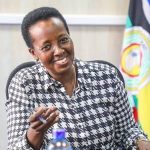
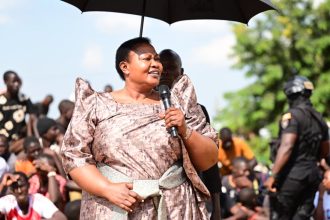
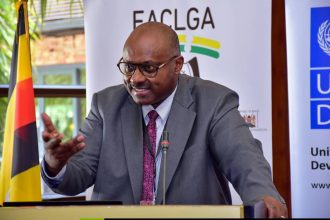
Geneva, Switzerland – The Minister of Gender, Labour and Social Development, Hon. Amongi Betty Ongom, has outlined Uganda’s bold strategy for job creation, inclusive growth, and protection of workers’ rights during her address to the 113th Session of the International Labour Conference (ILC) in Geneva.
Representing the Government of Uganda, Hon. Amongi congratulated the newly elected leadership of the ILC and acknowledged the complex global landscape marked by what she termed a “polycrisis” — a convergence of economic stagnation, climate change, informal work, and geopolitical instability.
“We are meeting at a time of interconnected global challenges,” she said. “Uganda is responding by strengthening the social contract that supports economic growth, employment, and workers’ rights.”
Minister Amongi underscored Uganda’s commitment to transforming the agricultural sector — where the majority of the population is employed — into a driver of economic change. The government is facilitating this by providing affordable credit to farmers, improving access to technology, and supporting agro-processing and logistics, she noted.
Beyond agriculture, Uganda is also investing in tourism, ICT, and infrastructure, fostering an enabling environment for foreign and local investment. These efforts have collectively created approximately 2 million jobs over the past five years.
In her speech, Hon. Amongi emphasized inclusive job creation programs, citing reforms to women, youth, and PWD employment initiatives, and enhanced access to funding through the National Social Security Fund (NSSF). New schemes are also helping retirees transition into entrepreneurship through prudent investment of their pensions.

The government has also prioritized skills development through presidential skilling centers and technical vocational education programs, offering young Ugandans both training and start-up tools to begin or grow small enterprises.
Over the past decade, Uganda has invested over UGX 8 trillion (USD 2.25 billion) in employment-focused initiatives. Programs such as the Parish Development Model (PDM), Youth Livelihood Programme (YLP), Uganda Women Entrepreneurship Programme (UWEP), and others have expanded access to affordable capital and supported innovation and export-oriented growth.

Minister Amongi also highlighted the rise of youth-led innovation, as government grants continue to support entrepreneurship in technology and emerging sectors.
Reaffirming Uganda’s commitment to international labor standards, the Minister announced the launch of the Third Decent Work Country Programme, backed by a US$ 67.96 million budget. The five-year initiative aims to address key challenges such as labor rights enforcement, workplace safety, employment productivity, and social dialogue.
“Uganda remains fully committed to creating decent jobs, promoting economic inclusion, and ensuring workers’ rights,” Hon. Amongi affirmed.
Her address concluded with a strong message of Uganda’s readiness to meet its obligations under the International Labour Organization (ILO) framework, while pursuing long-term national development goals.