When floods swept through downtown Kampala on September 16 this year, they left traders at Owino (St. Balikudembe) Market and nearby arcades counting heavy losses. What used to be a steady stormwater channel had become a pool of blocked drains and rising water.
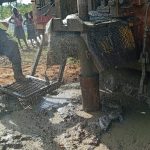
To the traders, the cause, was the ongoing construction along Nakivubo Channel, which they say has turned the city’s main drainage corridor into a private commercial project.
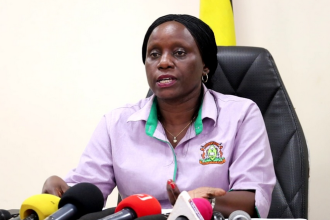
Now, led by former Owino Chairperson, who’s a long time activist of the traders’ rights and MP hopeful for Kampala Central, Susan Kushaba, they have taken their anger beyond City Hall, straight to the World Bank, accusing the Kampala Capital City Authority (KCCA) and KIHAM Enterprises Ltd of illegally turning public infrastructure into private property.
In a September 17, 2025 petition, addressed to the World Bank’s country office, Kushaba and her group accuse KCCA, the Ministry of Kampala Affairs, and Hamis Kigundu, the owner of KIHAM Enterprises, of ignoring environmental laws and pushing through construction without an Environmental Impact Assessment or public consultation. According to Kushaba, this is not development but destruction. She says the construction has blocked water flow, displaced traders, and exposed the city to flooding, all in the name of business.
The traders argue that the World Bank should not look away, since it once financed the Nakivubo Channel Rehabilitation Project. That project, they note, widened the channel and came with environmental conditions such as tree planting, realignment, and maintenance funding. Kushaba says all those safeguards have now been ignored.

“The World Bank helped protect this channel 25 years ago. Today, the same land is being sold off in broad daylight,” Kushaba said.
The group is asking the Bank to suspend any funding to KCCA until the matter is investigated and to compel both KCCA and Hamis Kigubdu to make public all agreements relating to the project. They also want compensation for traders whose goods were destroyed by floods, and restoration of the channel to its original state.

Kushaba further accuses Ham of using political connections to proceed with construction despite lacking the capacity and approval for such a large-scale project. She alleges that some of his agents have harassed or intimidated those opposing the works.
The petition paints a picture of frustration among small traders, who say their livelihoods are being eroded by unchecked development and corruption in city management. Environmentalists, too, have warned that continued construction on the Nakivubo Channel could worsen flooding and pollution in Kampala.
By taking the issue to the World Bank, Kushaba has once again positioned herself as a leading voice for Kampala’s traders and a critic of how public spaces are being handled by authorities. As she puts it, “The Nakivubo Channel is not just a drainage trench but the city’s lifeline. We cannot let it be buried under concrete.”