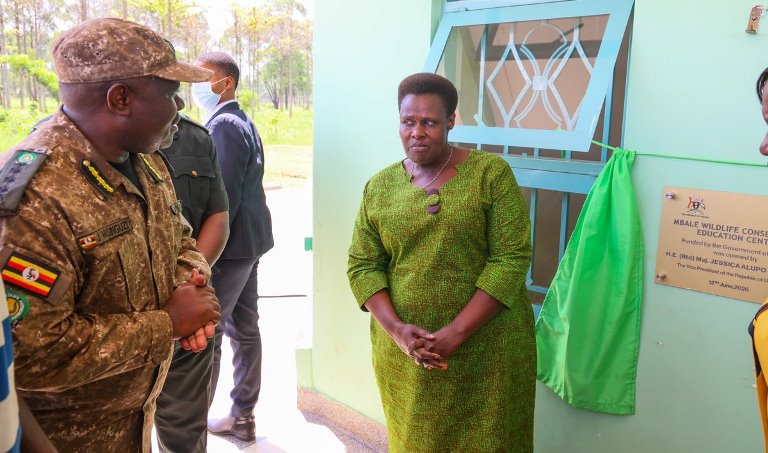
Mbale City has taken a major step toward becoming a regional hub for wildlife conservation and tourism following the official opening of the Mbale Satellite Wildlife Education Centre.
The facility, established under the Regional Wildlife Conservation Education Centres initiative, is aimed at bringing wildlife experiences closer to communities while promoting conservation education, research, and sustainable development across the country.
Speaking during the launch, Vice President Jessica Rose Alupo praised the Uganda Wildlife Education Centre for extending its services to eastern Uganda, describing the new facility as a significant investment in conservation and public education.
She noted that the Bugisu region’s rich cultural heritage and growing tourism potential make Mbale an ideal location for the centre, adding that the project will create opportunities for learning, employment, and economic growth.
According to Alupo, the centre will play an important role in increasing public awareness about wildlife conservation, supporting scientific research, and generating jobs for local communities. She added that the facility is expected to contribute to the growth of tourism and related sectors, including agriculture and industry.

Located along the Mbale–Tororo Road, the centre has already received several animals transferred from the Entebbe Zoo, including lions, zebras, waterbucks, ostriches, and peacocks.
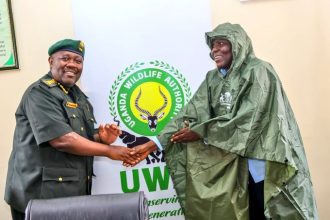
Uganda Wildlife Authority Executive Director Dr. James Musinguzi described the facility as a landmark achievement in Uganda’s conservation efforts. He said the centre represents a new approach aimed at decentralizing wildlife education and making conservation more accessible to communities outside central Uganda.

Dr. Musinguzi explained that while the Entebbe Zoo has served as the country’s primary wildlife education facility since 1952, the Mbale centre marks the beginning of a broader strategy to establish regional wildlife education centres across the country.
He emphasized that the project will provide schoolchildren, students, and families with an opportunity to learn about wildlife firsthand without travelling long distances, helping to nurture a new generation of conservation advocates.
Local leaders welcomed the development, saying it would reduce the cost of educational trips to Entebbe and open up new opportunities for employment and skills development.
Mbale Northern City Division Deputy Resident City Commissioner Were Yahya said the centre will create jobs for residents while offering internship opportunities to students pursuing courses in wildlife management, tourism, and environmental studies.
The Umukuuka wa Bugisu, Jude Mike Mudoma, thanked the government for choosing Mbale as the location for the facility, describing it as a transformational project that will strengthen conservation education, scientific research, eco-tourism, and community recreation in eastern Uganda.
He also urged stakeholders to explore sustainable alternatives to the use of animal skins in cultural ceremonies, saying innovative solutions could help protect wildlife while preserving cultural traditions.
The opening of the Mbale Satellite Wildlife Education Centre is expected to position the city as a leading destination for conservation learning and tourism in eastern Uganda, while bringing wildlife education closer to thousands of Ugandans.