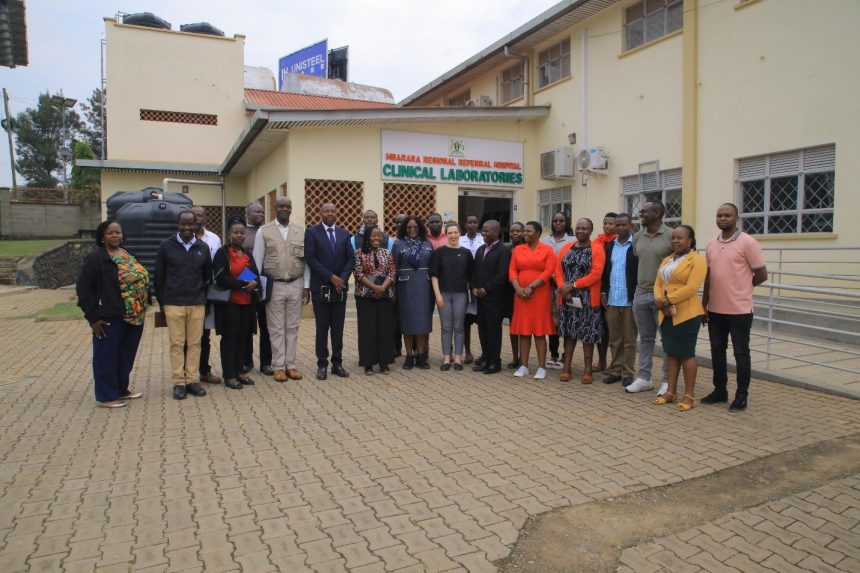
MBARARA, Uganda — A delegation from the United States Centers for Disease Control and Prevention (CDC), led by Country Director Dr. Mary Boyd, has concluded a strategic engagement with the leadership of Mbarara Regional Referral Hospital (MRRH) aimed at strengthening health collaboration and improving service delivery.
The delegation was received by MRRH’s Acting Senior Executive Consultant, Dr. Deus Twesigye, during a meeting held in the hospital boardroom. The discussions focused on key health priorities including HIV and tuberculosis management, sexual and gender-based violence, maternal and child health, and continuous quality improvement.
The meeting was also attended by Dr. Stavia Turyahabwe, the Commissioner for Communicable Disease Prevention and Control at the Ministry of Health, who represented the ministry during the engagement.
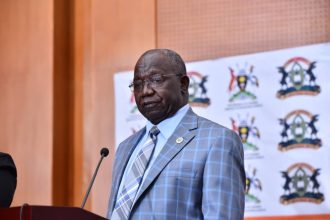
In his opening remarks, Dr. Twesigye highlighted the hospital’s remarkable transformation since its establishment in the 1930s as a nursing school. He explained that in 2005, the government elevated the institution to a regional referral hospital after transferring its management from the Ministry of Education under Mbarara University of Science and Technology (MUST), which was established in 1989.
Dr. Twesigye noted that MRRH has grown from offering basic healthcare services to providing a wide range of specialized and super-specialized medical services. Today, the hospital serves as a major referral center for health facilities across Western Uganda and neighboring countries including Tanzania, Rwanda, Burundi, and the Democratic Republic of Congo.

The senior consultant general surgeon attributed the hospital’s rapid growth to deliberate government support, particularly the establishment of MUST, which has boosted medical training and research in the region.
“Earlier, I spoke about our relationship with MUST; it is no longer an ordinary relationship—we are like conjoined twins,” Dr. Twesigye said.

Despite the progress made, Dr. Twesigye acknowledged that the hospital continues to face challenges related to human resources, infrastructure, and logistics, which sometimes affect service delivery and drug availability. However, he noted that the government is aware of these challenges and has continued to provide support.
During the meeting, Dr. Francis Mugabi, a Consultant in Public Health and Head of Department, highlighted the hospital’s progress in responding to emergencies and disease outbreaks. He pointed to the establishment of an Emergency Operations Center (EOC) within the hospital’s internationally accredited clinical laboratories, which will later be relocated to a new emergency call and dispatch center.
Meanwhile, Dr. Denis Nansera, a Consultant Paediatrician at the hospital, reported that MRRH has ensured continuous care for HIV and tuberculosis patients with support from the Ministry of Health. He attributed this success to improved integration of health systems and strengthened internal data-sharing mechanisms.
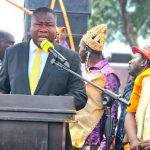
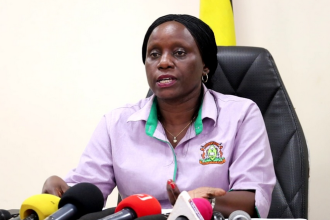
Speaking at the meeting, Dr. Turyahabwe commended the hospital for its effective response to disease outbreaks and encouraged closer collaboration with local governments to strengthen community health services.
She also highlighted the Ministry of Health’s ongoing efforts to improve human resources and digitization in the health sector, which are expected to enhance performance management and service delivery. She further urged the hospital leadership to strengthen internal systems to help reduce hospital-based deaths.
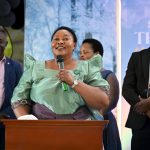
On her part, Dr. Mary Boyd expressed appreciation for the hospital’s healthcare operations and acknowledged the impact of recent U.S. State Department program realignments on the health sector.
However, she emphasized that the United States remains a key partner in Uganda’s health sector, citing a recently signed five-year Memorandum of Understanding (MOU) worth $2.3 billion aimed at strengthening Uganda’s health system.
The agreement focuses on improving disease surveillance and combating major diseases such as HIV/AIDS, malaria, and tuberculosis. Under the arrangement, the U.S. Government will contribute $1.7 billion, while the Government of Uganda has committed to increasing domestic health expenditure by $577 million over the next five years.
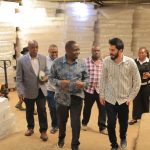
During the visit, the CDC delegation and Ministry of Health officials also conducted a guided tour of several key departments including the Integrated Chronic Care Clinic, the Emergency Call and Dispatch Center, and the hospital’s laboratory facilities, where they assessed opportunities and gaps in service delivery.
The visit is seen as a strategic step in strengthening collaboration between the U.S. Government and Mbarara Regional Referral Hospital, as the institution continues working toward its vision of becoming a center of excellence in quality healthcare services with support from the government and international partners.
About the Author:
Halson Kagure is the Communication and Public Relations Specialist at Mbarara Regional Referral Hospital, with a passion for healthcare and environmental issues.