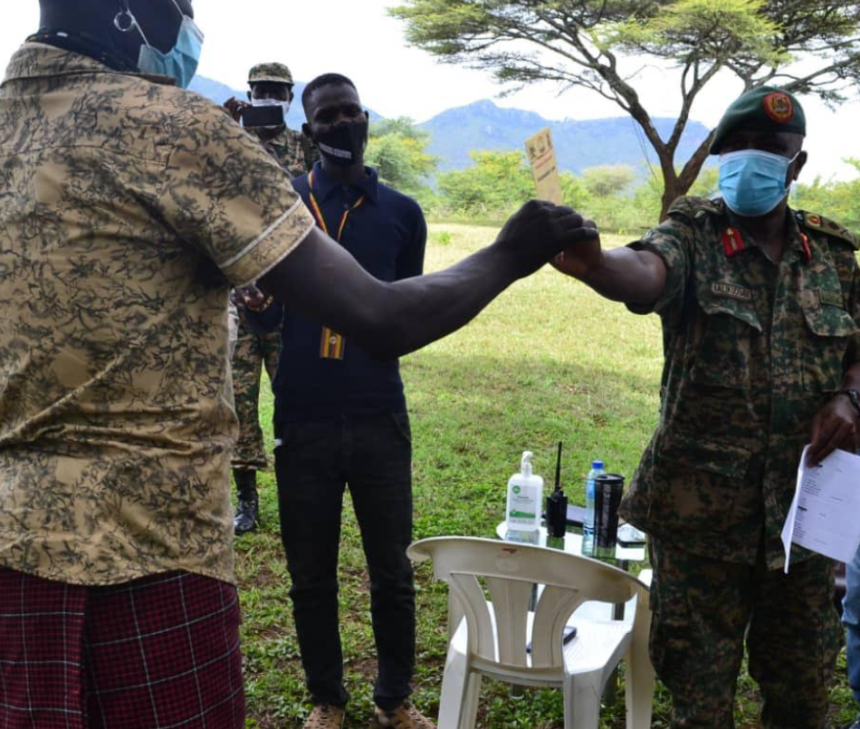
Steven Ariong | Karamoja, Uganda –– There is a saying that everything has a beginning and an end. It is true. When the Uganda government launched the disarmament exercise in Karamoja in 2001, the army, which was mandated to remove guns from the Karimojong, became the greatest enemy of the Karimojong community because they were taking guns from them. Likewise, the army also saw the Karimojong as enemies.
The Karimojong were using guns to protect their livestock against other enemies, but over time, some began using them to raid unarmed communities in neighboring Karamoja districts.
During that period, the two parties were not interacting peacefully; there was no meeting, laughing, or socializing as Ugandans normally do. It was only fighting and killing each other.
The persistence of the Karimojong, who vowed never to hand over their guns, was the root cause of the enmity. This continued until the army changed its disarmament tactics.
When President Yoweri Kaguta Museveni launched the disarmament exercise in Kangole, Napak District, he directed that the army should pursue voluntary disarmament, convincing the Karimojong to hand over their guns willingly. However, when the army realized that the Karimojong were still resistant and no one was giving up their guns voluntarily, they were compelled to apply forceful disarmament.

During the forceful disarmament, the army used all available tactics to recover guns. These included caning the Karimojong, impounding their cattle until guns were surrendered, and returning the animals afterward.
This publication has learned that while some of these tactics were effective, prompting many Karimojong to hand over guns to prevent their cattle from being taken, they also worsened relations between the two parties. It took over seven years for the Karimojong and the army to rebuild trust and understand each other.

The conflict between the army and the Karimojong continued for years, but today they have become strong allies. The Karimojong now trust the army more than any other force.
Entering army detachments, which Karimojong previously avoided, is now a positive experience. Many visit for medical services or casual work. The improved relationship has encouraged Karimojong to seek healthcare at army health facilities across the region.
Mr. Losigiria Loputh, an elder from Cambisi Village in the suburbs of Moroto Municipality, said his community now prefers army health units over Moroto Regional Hospital. He noted that in army facilities, patients are treated respectfully, unlike in some other government hospitals.
“Our disagreement with the army over guns has ended. We used to think life would be impossible without our guns, but when the army removed them, we realized guns were causing deaths in Karamoja,” he said.
Mr. Icumar Apaloput, a former prominent commander of cattle rustlers in Kotido District, expressed optimism about the improved relationship between the Karimojong and the army.
Lt. Gen. Wilberforce Serokoma, commander of the 3rd Division, emphasized that the UPDF is the force of the people of Uganda. “If they accept it, it remains their force,” he said.