South Sudan has been under a UN arms embargo since July 2018, after an agreement that ended a five-year civil war. On 13th July 2018, the UN Security Council passed Resolution 2428 on South Sudan, which has since then been extended over the years. On May 30th this year, with 9 members voting in favour and 6 abstaining, the Security Council extended the sanctions regime on South Sudan for one year, adopting Resolution 2781 (2025).
The resolution requires all UN member states to prevent the supply, sale, or transfer of arms to South Sudan. The embargo also withholds training, technical, and financial assistance related to military activities or materials to South Sudan.
What does this imply for Uganda’s military presence in South Sudan? Could we see condemnation and subsequent pressure for withdrawal from the international community?
The resolution also emphasizes that those responsible for violations of international humanitarian law and violations and abuses of human rights must be held accountable, and that the government of South Sudan bears the primary responsibility to protect its population from genocide, war crimes, ethnic cleansing, and crimes against humanity.
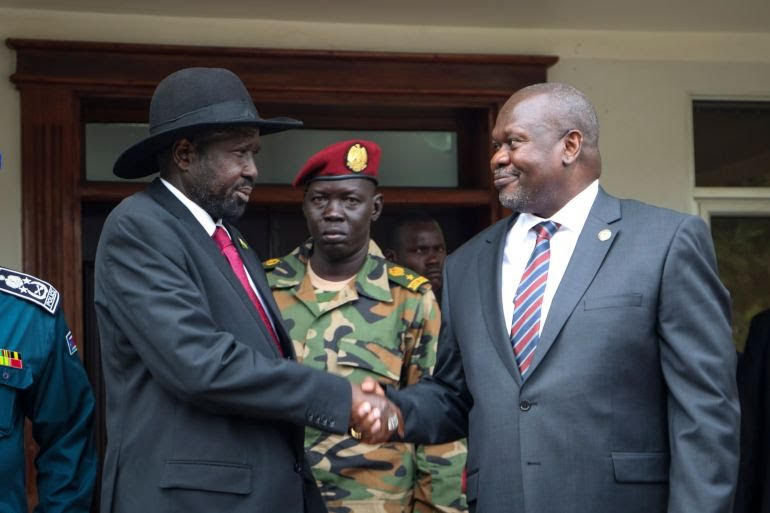
In March this year, Uganda, in conjunction with the Salva Kiir regime, deployed its forces — the Uganda Peoples’ Defence Forces — to fight a renewed conflict by forces loyal to Dr. Riek Machar, who has been under house arrest since March this year.

Authorities in Juba and Kampala have always given conflicting accounts of the purpose of the UPDF mission in South Sudan. In Uganda, the Speaker of Parliament did not allow any debate about the purpose and mission of the cross-border troop movement, stating that any missteps in submissions would destabilize the status quo.
This was during a parliamentary plenary on 20th March 2025 that legitimized the UPDF deployment without establishing the purpose of the deployment. This fatal mistake by the Ugandan Parliament binds the country to any liabilities, violations, and legal consequences of the deployment.

Apart from the presidents and military chiefs of the two countries, nobody else knows why the Ugandan forces were deployed in South Sudan, which has raised discussions about it being a machinery expedition between individuals in the Ugandan government and in the military to protect the weak Kiir government and to crush the resistance in Upper Nile — at an unknown multi-million-dollar pay or oil concessions to individuals.
The movement and transportation of UPDF troops, arms, and military trucks clearly violate the sanctions regime against South Sudan and ignore the ethnic dimension of the conflict, which creates risks of genocide and ethnic cleansing against the people of the Nuer ethnic extraction, and the general use of force against civilians, especially with stakes of renewed conflict in the Upper Nile region and joint military expeditions in Nasir that even included allegations of biological weapons.
However, the deployment was never authorized by the United Nations or regional blocs like the African Union and the East African Community, which is a clear violation of Articles 39, 42, and 52 of the UN Charter. This is a clear breach of international law, which has further legal consequences. Could Uganda/UPDF be at risk of being penalized?
Neither the Ugandan nor the South Sudanese authorities notified the UN Security Council Sanctions Committee or requested an arms embargo exemption regarding the deployment of UPDF soldiers.
The parties claim ratification of domestic legal requirements like parliamentary approval and bilateral cooperation, which are, however, inconsequential according to both the UN Charter and the embargo terms — and a clear breach of international law and protocol.
The terms of the embargo allow exemptions to the prohibition of the supply, sale, or transfer of arms and related assistance — but only in certain narrowly defined circumstances, and only with advance notification to the UN Security Council Sanctions Committee.
This puts Uganda, its forces, and their South Sudanese counterparts at risk of sanctions and penalties for any human rights violations, use of force against civilians, destruction, and other infringements as a result of the cross-border troop movements.
Will Ugandan troops be forced to leave South Sudan? This is much anticipated, especially after the extension of the embargo in May, since their presence — the arms, trucks, technical support, and other military hardware — clearly violates the embargo terms. This could be followed by sanctions and reprimands for the breach of rules, international law, and any other violations.
Richard Bard Byamukama is a lawyer and a Security Studies Expert
[email protected]