
Karamoja, Uganda — If there could be a way, government can organise special celebrations to mark the turning of Karamoja from a volatile region to now a peaceful region, the people who should not miss to be rewarded are the Resident District Commissioners whose efforts did a lot in supporting the recovery of more than 49,000 guns that have turned Karamoja into a peaceful region.
Although the region still has some pockets of killings, it is not as it used to be before the disarmament exercise was carried out, whereby 49,000 guns were collected.
It should be noted that the collection of these guns was not like prayer and fasting in a room where muchomo was being roasted; it was characterised by loss of lives and dialogue.
In 1997 to 2007 and 2008, accessing the Karamoja region was not easy. Whoever wanted to access the region had to be escorted by army fleets. UN crews could not even move within Moroto town without being escorted by two lead cars full of UPDF soldiers.
When it came time to get out of Moroto town, maybe to Nakapiripirit or Kotido, or to Soroti, UN staff had to be escorted with eight lead cars, both behind and in front, full of soldiers.

And those soldiers, while escorting any high-ranking official, had to ensure that the bullets were already in the trigger and the finger positioned on the trigger, ready for anything.
However, things have turned around, and Karamoja has become more secure compared to Kampala or any other region in the country.
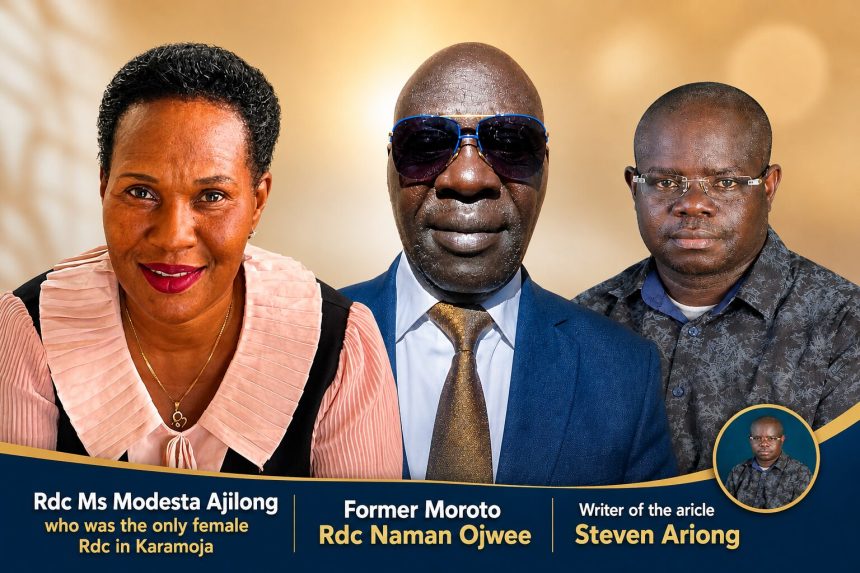
Among the Resident District Commissioners who should give a lecture if government is to organise special peace celebrations for Karamoja are Mr Nambafu and Mr Narman Ojwee.

In 2007 to 2008, when Mr Ojwee was taken as RDC Moroto, by that time Napak was still under Moroto District. Moroto District alone was registering a recovery of 100 to 150 killings every month.
This prompted Mr Ojwee to intensify his own approach of mobilisation together with Rupa elders such as Longora Ekamariputh, Joseph Otita, and the late Edison Achia. The group sat and formed Kraal Peace Committee members with support from UNDP.
These Kraal Peace Committee members did a recommendable job. Their work was to convince all armed rustlers, since they were their children, to accept and hand over the guns.
Other RDCs from other districts also emulated the formation of Kraal Peace Committees in their respective districts.
In Nakapiripirit District, Mr Godfrey Aluma; in Kaabong, Mr Okoth Nyalulu; in Amudat, Mr Stephen Nsubuga Bewayo; in Kotido, Mr Rex Achila; in Abim, Mr Peter Wasukira.
Mr Ojwee was elected the dean of RDCs, and he brought together a workmanship force that eradicated the appetite for guns among the Karimojong cattle rustlers.
To consolidate peace, all district security committees selected reformed warriors and took them for exchange visits, through support from UNDP, to other regions such as Turkana and West Pokot in Kenya.
That was the genesis of the Turkana pastoralists and Kenya Pokot gaining confidence to enter Uganda to graze their livestock until today.
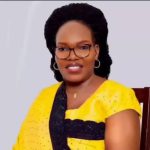
In 2019, when Nabilatuk District was curved out of Nakapiripirit, Ms Modesta Ajilong was the only female RDC in the entire region who was given to start up the district.
Although she met a lot of challenges as a female RDC, her mobilisation strategy also helped recover guns from the hands of the rustlers.
She also mobilised for the voting of the President and, according to the President’s winning pattern, Nabilatuk became second in percentage of President Museveni’s win and in the country it became third.
By that time, convincing the Karimojong to support the NRM was hard because they had thought that the NRM was after killing them and removing their guns.
Now my appeal to the current leaders occupying those offices is that please handle those offices with care because it was not easy to drive around Karamoja or even sit in those offices.
Any misconduct may again take us back to where the region was before, which we must fight against.