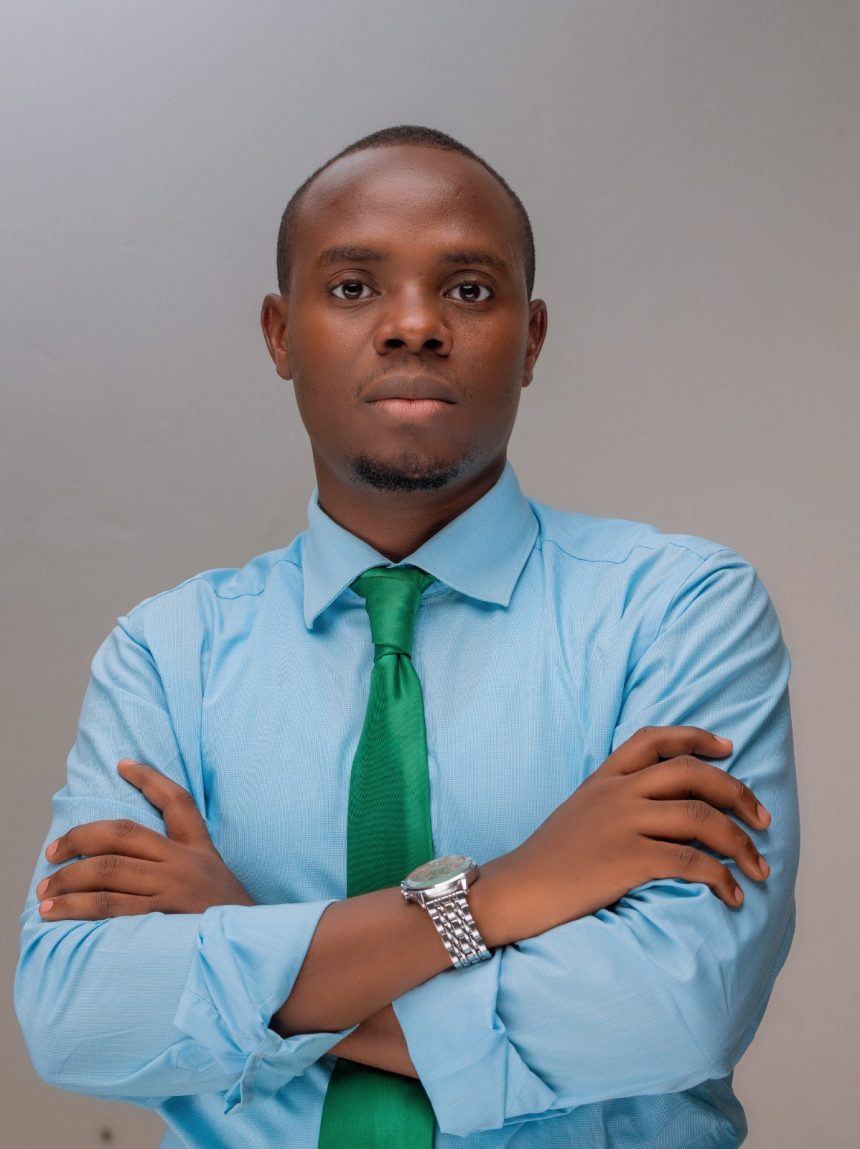

By Byayesu Agrippa Musinguzi
Young Democrat
On the evening of Monday, May 11, after leaving my Negligence and Strict Liability Law exam, I checked my phone and noticed a missed call from the Democratic Party First Lady and the party’s 2026 Lord Mayor flag bearer, Maama Beatrice Mao. When I returned the call, she informed me that she had left my invitation card to the Kololo swearing-in ceremony with the DP Deputy Treasurer, Mr.Kamoga John Bosco.
I was excited. A feeling of satisfaction swept through me and instantly replaced the stress of the exam. Truthfully, this would be my first time attending such a highly dignified national ceremony.
Early the next morning, Tuesday, May 12, 2026, I put on my shirt branded with the words, “Norbert Mao is Priceless.” The previous day, while at the Democratic Party headquarters at City House, I had informed the Kabaalaza group that I would attend the swearing-in ceremony in my DP shirt.
On the D-day, I jumped onto a boda boda, covered the shirt with the best of my jackets, and headed to Kololo not only to witness the ceremony, but also to proudly show my identity as a young Democrat.
This article, therefore, is a personal opinion from a first-hand witness to the events of that day, viewed through the lens of unity, national reflection, and the future of Uganda’s political direction.

The Turning of Events at the Grounds
What first caught my attention was the organisation at the entrance. After presenting my invitation card, a military officer directed me to board a shuttle parked near the Golf Course entrance. Inside were Members of Parliament (MPs), ministers, and other invited guests smartly dressed in suits and yellow custom-made attire.
The shuttle arrangement had been introduced to reduce traffic congestion, but the crowds were overwhelming. It almost resembled a Christian crusade gathering because, as a young Christian man, I have witnessed similar crowds at crusades before.
To someone unfamiliar with Uganda’s political spaces, it would have been difficult to distinguish who was a minister, MP, or ordinary guest inside that shuttle. Yet one thing was obvious: my shirt openly declared my admiration for Norbert Mao and my DP identity, while others in yellow clearly identified with the NRM.
The ministers and MPs were visibly excited to witness the swearing-in of their chairman. As I observed them, I found myself reflecting deeply about my own party and the opposition at large. If another political party took power tomorrow, would opposition supporters be welcomed with the same openness and excitement to witness their leader’s moment? Or would political divisions become so rigid that one would not even be allowed to board the same shuttle because they wore different party colours?
At the main ceremony grounds, I sat in the pavilion alongside top NRM figures such as Tanga Odoi and influential personalities like Frank Gashumba, among others.
The ceremony began with the arrival of visiting heads of state and dignitaries from other countries. Later, the President-elect, Yoweri Kaguta Museveni arrived under heavy security, briefly inspected the parade, and the swearing-in officially commenced.
The Chairperson of the Electoral Commission, Justice Simon Mugenyi Byabakama declared and presented him to the Chief Justice as the winner of the January 15, 2026 general election. The Chief Justice, Flavia Zeija then guided him through the oath-taking process as Uganda’s president for another term, prompting loud ululations from the crowd.
Thereafter, he once again inspected the parade as Commander-in-Chief of the UPDF. The military exhibitions followed, including air force displays involving fighter planes and parachutes, motorcade demonstrations, and disciplined parade formations.
What stood out for me most was the patience, discipline, and uniformity displayed by the officers and ushers throughout the event. I found myself wondering whether these were truly the same institutions many ordinary Ugandans fear simply because of the camouflage uniforms.
I remembered my Constitutional History lectures and the stories about the pre-1986 military, often described as undisciplined groups associated with looting, violence, and abuse. Sitting there, I reflected on how much perceptions and institutions can evolve over time.
At one point, the lady seated next to me whispered, “I admire the army. My son will join the army by force. I admire their footwork.”
Everything visible to the eye was glamorous: the decorations, red carpets, parades, dignitaries, clergy, and military displays. But as a student of Literature and Law, my mind could not stop interpreting the deeper meaning beneath the ceremony itself.
Beyond the glamour, I saw questions about Uganda’s future, the role of the opposition, and the possibility of unity amidst political competition.
The Bitter Truth for Uganda
What if Ugandans chose unity over endless political hostility?
Bob Marley famously sang, “One Love.” What if, despite our political differences, we embraced the understanding that we all ultimately love Uganda?
My mother often reminds me that “Politics is a dirty game,” and repeatedly warns me to be careful. But what if there came a moment when political actors left the dirt outside the room and sat together at one table called “Uganda” to dialogue honestly for the good of the nation?
What if the guns, planes, armies, and motorcades existed primarily to protect the interests of citizens rather than becoming symbols that create fear among sections of the population whenever political power shifts?
What if appointments, recruitment, opportunities, and recognition were guided more by merit than political identity? A village boy from Sheema, a young Democrat, and a law student like myself would continue dreaming boldly despite all odds, inspired by Martin Luther King Jr.’s famous words: “I Have a Dream.”
These thoughts continuously ran through my mind throughout the ceremony.
At that moment, I appreciated Hon. Norbert Mao for consistently championing the spirit of unity amidst diversity. Among opposition leaders, he was present at the ceremony. I believe he carries a vision of the Uganda he hopes to see and would sacrifice for.
While others may criticise him, he chose engagement, patience, and dialogue.
On the invitation card, I also noticed that the Leader of Opposition had been invited. However, I did not see him at the ceremony. That absence raised several questions in my mind than answers.
Did he miss an opportunity to observe and benchmark?
Does such absence suggest that some leaders prioritise being “opposition” more than being “Ugandan”?
Does it reflect a mindset more focused on political confrontation than on exploring avenues for national dialogue and collective solutions?
In my view, the absence was a missed opportunity. Leadership also involves observing, listening, engaging, and understanding national moments, even when one disagrees politically.
Uganda’s future is bigger than political camps. The bitter truth is that opposition politics should not merely become a platform for personal enrichment while ordinary Ugandans continue struggling with poverty and hardship.
As the country moves into another political term, this should serve as a clarion call to the opposition, to rise above endless confrontation and seek constructive alternatives. Dialogue, cooperation, and strategic engagement may achieve more for ordinary Ugandans than permanent hostility and performative politics.
At the same time, opposition leaders must remain exemplary by fighting corruption, offering practical alternatives, and putting the interests of citizens first.
Uganda needs mature politics built on ideas, integrity, and patriotism rather than endless cycles of division.
FOR GOD AND MY COUNTRY.