
The Ugandan government has indefinitely postponed the annual Uganda Martyrs Day celebrations at Namugongo following fears of a possible spread of the deadly Ebola virus from the eastern Democratic Republic of Congo and some parts of Uganda.
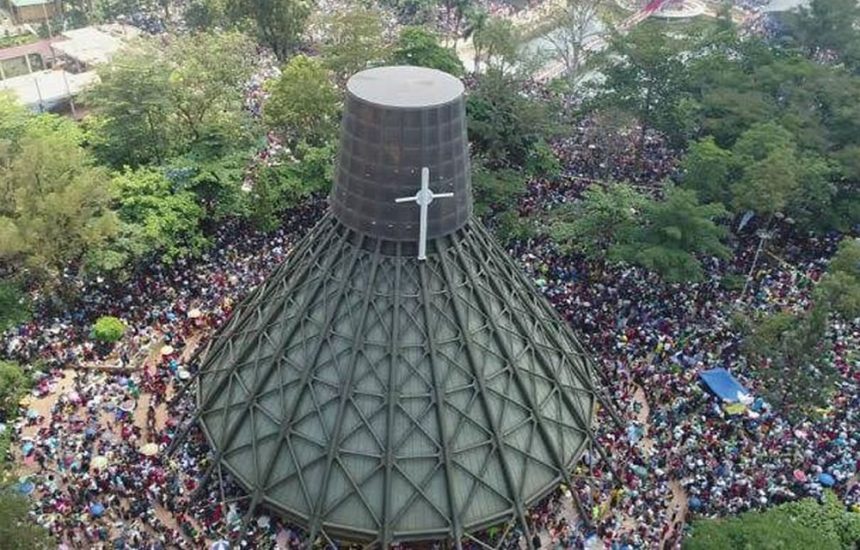
The Martyrs Day celebrations, held every year on June 3, attract massive crowds of pilgrims from across East Africa and beyond, with attendance in previous years reaching hundreds of thousands and sometimes millions.
In a statement issued on May 17, President Yoweri Kaguta Museveni said the decision was reached after consultations with the national epidemic response task force and religious leaders.
“After consultations with the national epidemic response task force and religious leaders, we have decided to postpone Martyrs Day celebrations to a later date, which will be communicated,” Museveni stated.
The President explained that Uganda receives thousands of pilgrims annually from eastern Congo, where an Ebola outbreak has been reported, making large public gatherings a major health risk.

The World Health Organization also declared the Bundibugyo Ebola outbreak in the Democratic Republic of Congo and Uganda a Public Health Emergency of International Concern.
Reports indicate that the outbreak’s epicenter is in Ituri Province in eastern DRC near the Ugandan border. Media reports from the region suggest that over 100 people have already died from the disease, with hundreds of suspected infections recorded. Uganda has also reportedly registered a few cases involving travelers from Congo.

The Uganda Martyrs Shrine at Namugongo Martyrs Shrine is one of Africa’s largest religious pilgrimage sites and annually hosts believers from Uganda, Kenya, Tanzania, Rwanda, South Sudan, and the Democratic Republic of Congo.
Last year, more than 600,000 pilgrims reportedly attended the celebrations, while organizers had projected the number to exceed one million this year.
Stephen Samuel Kaziimba Mugalu supported the government’s decision, saying that protecting lives and public health was more important than proceeding with the event.
He confirmed that religious leaders were consulted before the announcement and emphasized that safeguarding worshippers had to come first.
Every year, thousands of pilgrims walk long distances across East Africa to honor the 45 Anglican and Catholic converts who were killed in 1886 during the reign of Kabaka Mwanga of Buganda for refusing to renounce their Christian faith.
Some pilgrims travel for weeks on foot, enduring difficult weather conditions and fatigue as part of their spiritual journey.
According to regular pilgrim John Mwaura from Nakuru, Kenya, pilgrims usually receive support from churches, schools, hospitals, and local families along the way who provide food, shelter, and prayer spaces.
“Though we are not happy about the postponement, we cannot ignore the danger of Ebola infection. The safety of pilgrims is more important,” Mwaura reportedly said.
He revealed that he had already started preparing for the 500-kilometer journey to Namugongo before hearing the news of the postponement.
Uganda’s Health Minister, Jane Ruth Aceng, urged religious leaders and pilgrims to remain calm as government and health officials continue monitoring the situation.
She warned that because some pilgrims believe the holy water at Namugongo has healing powers, there was concern that infected individuals could secretly cross borders into Uganda and potentially spread the virus.
Church of Uganda Provincial Secretary Rev. Canon William Ogeng also thanked health workers, government officials, and service agencies for their efforts in protecting the country from the deadly outbreak.
Authorities have not yet announced a new date for the Martyrs Day celebrations