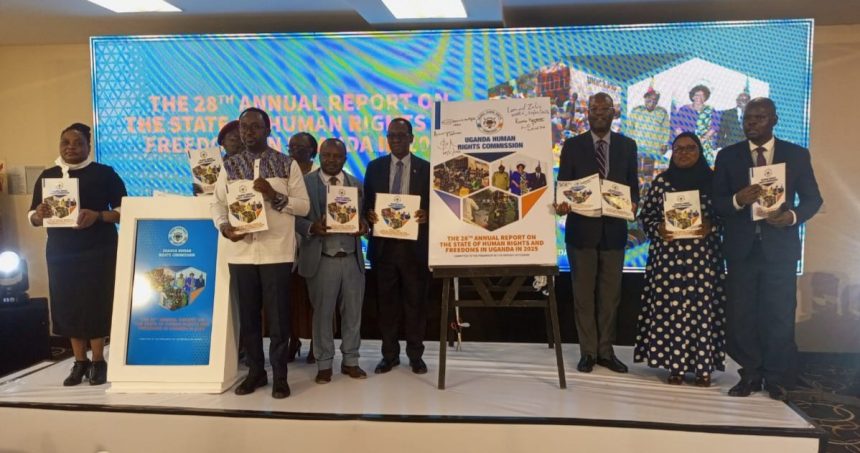

The Uganda Human Rights Commission’s 28th Annual Report has ignited renewed national concern after laying bare a range of human rights challenges affecting the country. It draws attention to persistent delays in justice delivery, cases of corporal punishment reported in parts of the Lango sub-region, and a worrying surge in drug and substance abuse among young people.
The report also highlights growing mental health pressures and other serious health concerns such as cancer, warning that many youths are drifting into addiction, despair, and psychological distress amid economic strain and limited social protection.
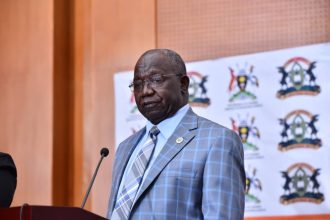
The report was formally presented in Kampala by Hon. Lamex Apitta Omara, speaking on behalf of Commission Chairperson Mariam Wangadya. He clarified that the publication is intended to promote accountability and strengthen respect for human rights rather than to target or undermine institutions. He encouraged both state and non-state actors to take the findings seriously and collaborate in improving governance, justice systems, and service delivery across the country.
According to the findings of the Uganda Human Rights Commission, 1,747 complaints were registered in 2025, with 324 confirmed as involving actual human rights violations. The Uganda Police Force recorded the highest number of complaints at 181 cases, followed by private individuals and the Uganda People’s Defence Force. The most frequently cited abuses included unlawful detention, torture, and denial of child maintenance, underscoring continued concerns about abuse of authority and weak enforcement of rights protections.
The commission further revealed that its tribunal processed a significant number of cases during the year and ordered compensation totaling UGX 885 million for victims of torture, unlawful imprisonment, and related violations. Despite these rulings, the report notes that many victims still experience delays in receiving compensation due to funding constraints, growing case backlogs, and reliance on outdated manual systems that slow down justice processes.

A major portion of the report focuses on the rising crisis of substance abuse among Uganda’s youth. It describes drug and alcohol addiction as a rapidly growing national challenge, especially among unemployed people aged 18 to 30. The report estimates that Uganda’s average alcohol consumption stands at around 12 liters of pure alcohol per person annually, placing the country among the highest globally. This trend is attributed to unemployment, poverty, rural-urban migration, peer pressure, and the influence of digital and social media environments.
The report also warns that drug exposure is occurring at increasingly younger ages, with many children introduced to substances such as marijuana, kush, shisha, and kuba between the ages of 13 and 15. These substances are often used as coping mechanisms for stress, poverty, and emotional hardship, but they significantly increase the risk of long-term dependency and deepen social instability among vulnerable youth.

On mental health, the report estimates that about 3.7 million Ugandans are currently experiencing mental health conditions, with young people forming the largest proportion. Health facilities are reportedly under significant pressure, with Butabika National Referral Mental Hospital noting that about 40 percent of admissions are linked to substance abuse. Regional facilities such as Soroti Regional Referral Hospital also continue to manage high numbers of mental health cases on a weekly basis.
Legal analysts and academic experts, including voices from Makerere University, have welcomed the report while urging improvements in research methodology and stronger institutional reforms. They particularly emphasized the importance of upholding constitutional safeguards such as the 48-hour detention rule to protect citizens from abuse. As Uganda continues to grapple with rising addiction, mental health challenges, and human rights violations, the report stands as a sobering reminder of the urgent need to restore dignity, opportunity, and hope—especially among the country’s youth.