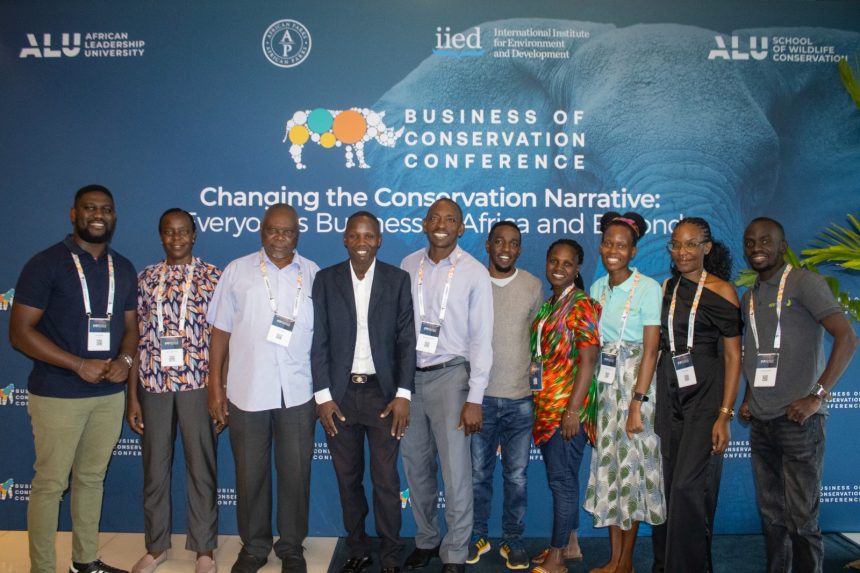
Stakeholders at the Business of Conservation Conference 2026 have called for stronger collaboration across sectors to address persistent challenges in carbon and biodiversity markets.
The conference, held from March 4–7 at the Radisson Blu Hotel Nairobi Upper Hill in Nairobi, brought together policymakers, conservation organisations, investors, private sector actors and community representatives. Organised by the African Leadership University School of Wildlife Conservation, the meeting focused on rethinking conservation as a viable economic activity under the theme “Changing the Economics of Conservation.”

Participants said the discussions come at a time when biodiversity loss continues to accelerate, raising concerns about the long-term sustainability of ecosystems and livelihoods dependent on them.

Among the contributors was ECOTRUST, a Ugandan organisation established in 1999 as the Environmental Conservation Trust of Uganda. The organisation has been working with smallholder farmers in key biodiversity areas such as the Albertine Rift and Mount Elgon to link conservation efforts with income-generating activities.
Speaking during a panel discussion on biocredits, Pauline Nantongo emphasised the need for multi-level partnerships to unlock the potential of emerging conservation finance mechanisms.
“Since we had different groups of people here, I would have liked to see people commit to partnering with us. Partnerships should tackle the challenges faced in the biocredits market to make the future of conservation meaningful. I would also have liked to see young professionals signing up to the African Leadership University, which offers an MBA in biocredits. I would also have liked to see journalists in the room committed to pursuing careers informed by biocredits,” said Nantongo.
She noted that ECOTRUST has been promoting biodiversity credits, a form of Payment for Ecosystem Services (PES), to support conservation while generating income for communities. According to the organisation, participating communities engage in activities such as beekeeping, tree nursery establishment and other green enterprises linked to ecosystem restoration.

The approach also targets challenges such as human-wildlife conflict in parts of the Albertine Rift, where fragmented habitats have disrupted wildlife movement. Through community partnerships, the organisation has supported mapping of wildlife corridors and restoration of forest linkages to facilitate safer animal movement.
ECOTRUST’s Trees for Global Benefits (TGB) programme has restored more than 30,000 hectares of land through forestry and agroforestry interventions on private land, while linking farmers to carbon market opportunities.
Community representatives said local involvement remains central to the implementation of conservation initiatives. Geoffrey Ozeera highlighted the role of communities in monitoring biodiversity.
“Communities were leading the implementation of biocredits by helping in monitoring and data collection processes. Individuals from the community were recruited to monitor biodiversity resources, for example the Bungako forest, using different methods such as electronic tools to collect data. Community groups also visited the forests monthly to observe biodiversity,” said Ozeera.
Conference discussions pointed to a growing emphasis on conservation finance, partnerships and community-led models as part of broader efforts to align environmental protection with economic development.