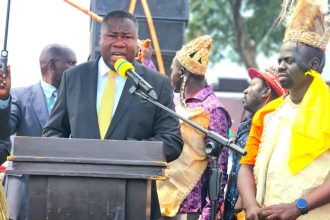
SOROTI – Before the dust of urbanisation blurred its charm and the bustle of a growing municipality gave way to unchecked decay, there existed a Soroti that stood as a beacon of order, pride, and community spirit — a legacy many still associate with the tenure of Captain Mike Mukula.
In the collective memory of residents and long-time observers, Mukula’s leadership represented more than political office. It embodied a standard of civic excellence that transformed the eastern Ugandan town into a destination of prestige, known regionally for its cleanliness, accessibility, and vibrant social fabric.
A Model of Sanitation and Order
Perhaps the most enduring hallmark of that era remains Soroti’s reputation as the cleanest town in East Africa — a distinction that drew admiration from beyond Uganda’s borders. Under Mukula’s watch, waste management was not an afterthought but a civic religion. Streets were maintained with discipline, public spaces respected, and the “Green City” vision was a lived reality.
Today, residents contrast that legacy with the current state of affairs,garbage accumulation, haphazard planning, and the neglect of key infrastructure like the Old Bus Park on Serere Road, once a model of organised transport.

Health and Education: A Minister on the Ground
Mukula’s influence extended beyond local administration. As a Minister of Health, he leveraged national office to uplift his home region, introducing standards that aligned with global practices. During his tenure, Soroti became a sanctuary of wellness, with health facilities receiving attention that mirrored the urgency of a national priority.

Education, too, flourished, not through slogans, but through visible investment in the region’s human capital.
“Politics of the Plate” and the Golf Course Gatherings
Beyond policy, Mukula understood the power of symbolism. The legendary gatherings at Soroti Golf Course, where steaming plates of pilau were shared across social classes, came to define what many now nostalgically term the “politics of the plate.”
These were not mere meals, they were acts of communion. They dissolved the barriers between the elite and the ordinary, fostering a rare sense of belonging and mutual respect between leaders and the led.
The Katodi Effect: A Leader’s Presence
For those who lived through it, the mention of “Katodi” the rhythmic energy that accompanied Mukula’s return to town — evokes a visceral memory of excitement and order. His presence changed the town’s tempo. There was an unspoken discipline, a collective pride that seemed to govern daily life whenever the Captain was around.
That accessibility, residents recall, was not reserved for the powerful. Mukula never ignored a call from a constituent — whether in times of crisis or for a simple greeting. In an era where political leaders increasingly shield themselves behind protocol and tinted glass, that openness has become a benchmark against which others are measured.
A City’s Longing for Lost Standards
As Soroti grapples with the pressures of urbanisation, chaotic development, environmental neglect, and a fraying social contract, the question being asked in tea stalls, boardrooms, and public forums is no longer merely political.
It is existential: How does a city reclaim its soul?
“We aren’t just missing a politician,” reflects one resident. “We are missing a standard of excellence.”
For many, Mukula’s era represents not a political nostalgia, but a civic template, proof that with visionary leadership and community engagement, a town can be more than a transit point. It can be a home.
As Soroti looks to the future, the call is not for a return to the past, but for a rebirth of its principles: cleanliness, accessibility, community, and pride.