RUBIRIZI, Uganda — Hundreds of households in Rubirizi District are set to benefit from a growing poverty alleviation initiative after the Rural Initiative for Poverty Alleviation (RIPA) distributed 14 cows and 20 goats to selected farmers under its zero-grazing programme.
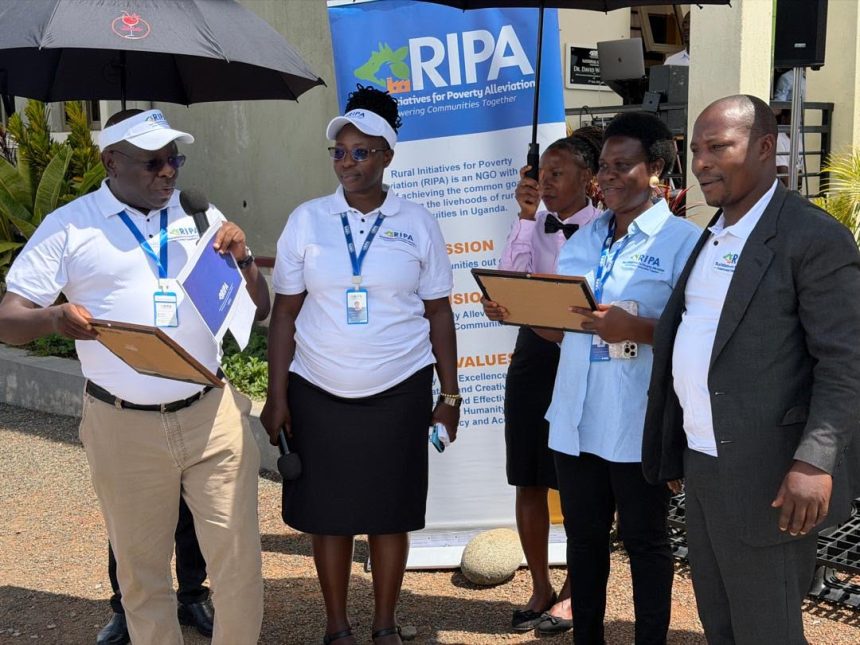
The livestock were handed over by RIPA founders, board members, religious leaders, and local leaders during a thanksgiving ceremony held at the organisation’s headquarters in Ryekibagane Village, Magambo Sub-county, to celebrate two years of RIPA’s operations in the district.
According to RIPA officials, the latest distribution brings the total number of animals so far given to households to 200 livestock, including 100 goats and 40 cows distributed over the last two years.
The programme aims to improve household incomes, enhance nutrition, and reduce poverty by supporting families with sustainable farming projects, including livestock keeping, poultry farming, and backyard vegetable growing.
Speaking during the event, RIPA Executive Director Vincent Bamugaya said the organisation is committed to empowering local farmers, especially women and youth, through modern agricultural practices and skills development.

“Our goal is to bridge the gap between vulnerable households and sustainable income generation. We are equipping farmers with livestock, training, and knowledge on proper animal management so they can improve their livelihoods,” Bamugaya said.
He urged residents to embrace modern farming methods, value addition, and mindset change to boost agricultural production and achieve sustainable development.

RIPA Project Coordinator, Lion Rosebel Akiki Kwesiga, said the organisation focuses on five major pillars: production, value addition and processing, strategic partnerships, micro-savings and credit, as well as research and environmental conservation.
She revealed that more than 200 farmers have already been trained in zero grazing, dairy farming, pasture establishment, and goat rearing, with nearly 5,000 people expected to benefit from the initiative.
Kwesiga added that RIPA also plans to empower over 1,000 youth through vocational training to enable them create sustainable income-generating activities.
“RIPA has now expanded beyond livestock distribution to include poultry farming, kitchen gardening, farmer training, and market linkages to help farmers access reliable buyers,” she noted.
The organisation’s current target is to reach over 500 households with livestock under the zero-grazing programme, which enables farmers to raise animals on smaller pieces of land while increasing milk and meat production.
RIPA Vice Chairperson Judith Lutaro Kobusingye said the organisation’s vision is to promote socially and economically empowered communities.
Meanwhile, Rubirizi Assistant Chief Administrative Officer Amidu Kaunya Nshekanabo praised RIPA for complementing government efforts in fighting poverty and hunger through practical community support.
“RIPA’s interventions have greatly helped families improve household incomes, reduce domestic conflicts, and create sustainable sources of livelihood,” he said.
He encouraged beneficiaries to properly care for the animals and extend support to other vulnerable families within their communities.
Rev. Fr. Aventino Arinitwe of Rugazi Catholic Parish also commended the Bamugaya family for using their resources to uplift vulnerable families in society.
He urged residents to embrace unity, prayer, hard work, and generosity towards neighbors in need.
Some of the beneficiaries, including Turyahebwa Innocent, Kyarisima Agnes, and Nkesiga Jane, thanked RIPA for transforming their lives through livestock support.
They said the animals have helped them improve household income, fight poverty, support children’s education, improve nutrition through milk production, and generate manure for farming activities.