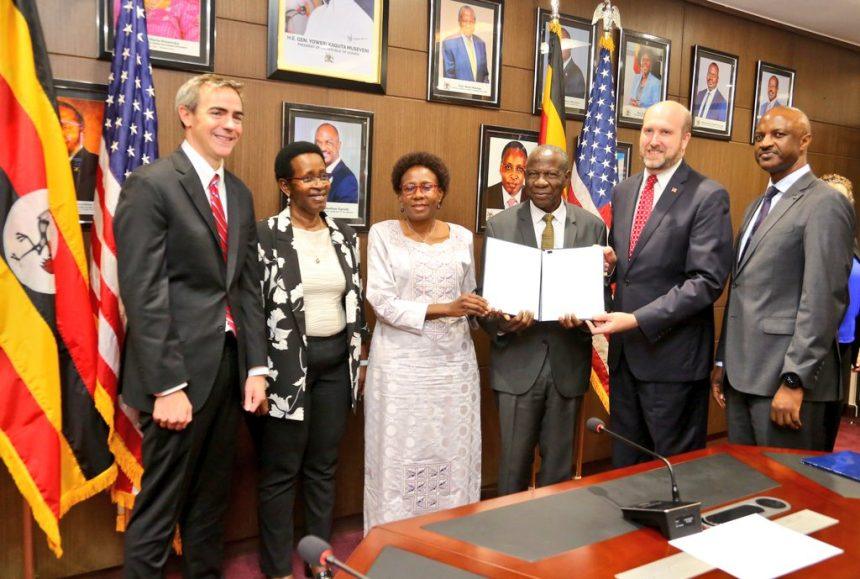

KAMPALA, Uganda – The United States and Uganda today solidified a major five-year health partnership, signing a $2.3 billion Memorandum of Understanding (MOU) designed to save lives, fortify Uganda’s health system against infectious diseases, and advance a shared goal of long-term sustainability and self-reliance.
The agreement, titled the “U.S.-Uganda Bilateral Health Cooperation MOU,” represents a significant co-investment. The U.S. Government has committed to providing up to $1.7 billion in support from 2026 to 2030. In a pivotal shift toward greater Ugandan ownership, the Government of Uganda pledged to increase its own domestic health spending by more than $500 million over the same period, gradually assuming more financial responsibility as U.S. support scales down.
“The MOU advances the U.S – Uganda bilateral relationship and supports Uganda to develop a resilient health system that prevents the spread of emerging and existing infectious diseases globally,” the joint statement noted.
A Strategic Shift Towards Sustainability
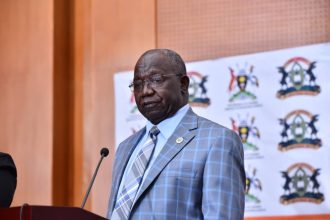
U.S. Ambassador William W. Popp, speaking alongside Uganda’s Finance Minister Hon. Matia Kasaija at the signing ceremony, emphasized the strategic evolution of the partnership.

“Today, we are building on prior successes and making a significant shift toward promoting self-reliance in the health sector,” Ambassador Popp stated. He highlighted the focus on “strong community health systems, clear performance metrics, and a foundational commitment to data systems and global health security.”
Minister Kasaija welcomed the commitment, stating the collaboration “will yield not only disease-specific outcomes but also significant improvements in national systems, institutions, and workforce capacity. This is highly commendable.”

Key Pillars of the Agreement
The MOU outlines several innovative provisions aimed at building a sustainable, Ugandan-led health system:
· Commodities & Supply Chains: Procurement of essential health commodities will gradually transition from U.S. to Ugandan government management over five years, strengthening local supply chain systems.
· Frontline Health Workers: Health workers currently funded by the U.S. will be integrated into Ugandan government payrolls, ensuring continuity of care and stabilizing the workforce.
· Data & Surveillance Systems: The U.S. will invest significantly in Uganda’s data ecosystem, enhancing electronic medical records, disease surveillance, and integration with a national data warehouse to support evidence-based decision-making.
· Faith-Based Providers: The partnership will channel support to faith-based healthcare providers—a critical part of Uganda’s health network—through performance-based agreements, grants, and support for digitization and community health insurance.
· Co-Investment Model: Uganda’s commitment to increase its health budget is framed as a “critical step” to sustain health gains and achieve self-reliance.
Building on a 60-Year Foundation
The new MOU builds upon more than six decades of U.S.-Uganda health collaboration, which has supported life-saving programs for HIV/AIDS, tuberculosis, malaria, maternal and child health, and polio eradication. The U.S. remains Uganda’s largest global health partner.
The agreement aligns with the U.S. America First Global Health Strategy, which seeks to protect American health and prosperity by strengthening health systems abroad to prevent the international spread of diseases.
Officials from both nations underscored that the long-term goal is an effective health system “sustained and owned by the Government of Uganda’s institutions and communities,” ultimately safeguarding the health of citizens in both countries.