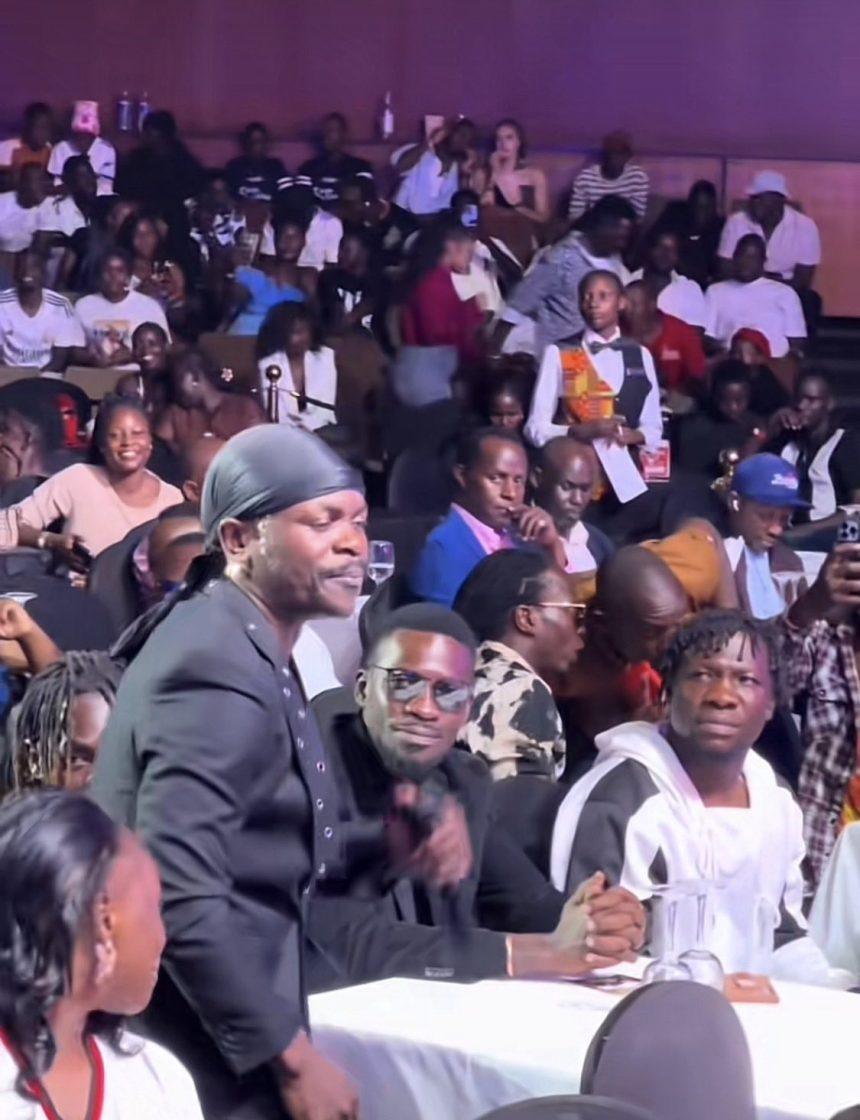
A recent video circulating on social media has sparked intense debate after singer Omulangira Ssuuna, popularly known as OS Ssuuna, was publicly snubbed by National Unity Platform (NUP) presidential candidate Robert Kyagulanyi Sentamu, alias Bobi Wine. The incident happened over the weekend at the Kampala Serena Hotel during Mikie Wine’s concert, where he was celebrating 15 years in the music industry.
Bobi Wine, who had just concluded his campaign trail in western Uganda, attended the concert to support his younger brother. His table included fellow artists such as King Saha and his elder brother, Banjo Man.

However, one of the most talked-about moments of the night came when OS Ssuuna stepped forward to perform around Bobi Wine’s table. As he sang, Ssuuna extended his hand towards Bobi Wine—only for the NUP presidential candidate to refuse the handshake. The rejection visibly embarrassed Ssuuna, though he continued performing. The clip immediately dominated social media, drawing mixed reactions.

Many online commentators, including journalist Andrew Kyaamagero, praised Bobi Wine’s action as a display of honesty—claiming he does not “pretend” around people he dislikes. But others argue that the gesture raises serious concerns about his temperament, emotional control, and suitability for national leadership.
Why Was OS Ssuuna Treated This Way?
A major point of discussion revolves around OS Ssuuna’s past appearance in Gulu, where he performed for Operation Wealth Creation (OWC) coordinator Gen. Salim Saleh. Although Gen Saleh openly criticized the song Ssuuna performed, he still gave him 10 million shillings as appreciation. This event, however, led many people to label Ssuuna as an “NRM singer,” even though he has not appeared in any of the ruling party’s current campaigns.
This background does not fully explain Bobi Wine’s snub, and it leaves what many describe as “uncomfortable questions”—especially considering he is the biggest opposition presidential candidate.
A Question of Leadership and Emotional Maturity
Bobi Wine has repeatedly said that many artists “betrayed him” by refusing to support his political struggle. He has also accused fellow Baganda of shunning him. Yet at Mikie Wine’s concert, a fellow Muganda artist reached out for a simple handshake—and was dismissed in front of hundreds of people.
For undecided artists and citizens watching the moment, the question becomes: If he treats a fellow musician this way, what confidence does he give to those who are unsure of where to align politically?
Critics say the snub shifted the spotlight from Mikie Wine’s milestone celebration. Instead of talking about the concert, all attention has turned toward Bobi Wine’s gesture—an act many have described as driven by ego rather than leadership.
Historical Lessons: Leaders Put Ego Aside
- Throughout history, great leaders have chosen reconciliation over ego:
- Nelson Mandela sat at the negotiating table with the apartheid regime.
- Martin Luther King Jr. held discussions with those who opposed and even harmed his movement.
- President Museveni famously forgave Chris Rwakasisi, who was once on death row.
- In Kenya, Raila Odinga—despite believing he won elections—still sat with leaders like Mwai Kibaki and Uhuru Kenyatta for the sake of national unity.
If these leaders could set aside emotions and shake hands with their harshest critics, why couldn’t Bobi Wine do the same with a fellow musician who is not ven his enemy in anyway?
What Happens If He Treats Bigger Opponents the Same Way?
The concern among critics is clear:
If he could publicly shun OS Ssuuna—who is not even a prominent NRM figure—what would he do to outspoken NRM artists like Bebe Cool or Eddy Kenzo? What would happen if he had to deal with the First Family, government officials, or political rivals on national matters?
This, they argue, is not what “presidential material” looks like. Leadership requires emotional intelligence, a sense of timing, and the ability to separate personal feelings from public duty.
A Warning Ahead of January 15, 2025
As Uganda heads toward the election date of 15th January 2025, critics say this moment should be a reminder to voters. Instead of praising the snub, journalists and opinion leaders should be questioning whether such behavior reflects maturity, diplomacy, and reliability.
A president must know when to let go, when to forgive, and when to put the nation’s image above personal emotions.
For many, the incident at Serena Hotel was not a show of strength—it was a show of amateurism.