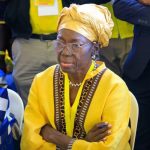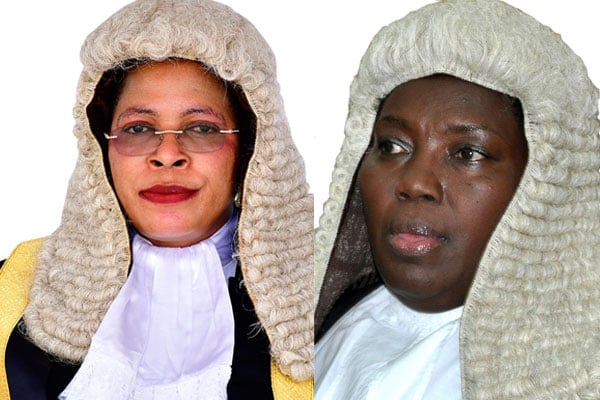
If power is performance, then Uganda’s political stage has two leading women sharing the spotlight—Rebecca Alitwala Kadaga, the establishment’s seasoned dealmaker, and Anita Annet Among, the present Speaker whose rapid ascent has reshaped Parliament’s center of gravity.
Their contest is not just personal. It’s a referendum on how the ruling party wants to be seen: by its cadres, by the regions, and by the world.
What their rise tells us.
For decades, President Yoweri Museveni’s government has placed women in consequential roles—an evolution mirrored across the continent. In Uganda, few profiles symbolize that shift more clearly than Kadaga and Among. Kadaga was the first Ugandan woman to open her own law chambers (1984), later becoming the country’s first female Speaker (2011).
Among, born in Bukedea (Teso), is the Speaker of the 11th Parliament (since 2022), stepping in after Jacob Oulanyah’s death and consolidating power with formidable speed.
Kadaga’s legacy—gravitas and scars.

Kadaga’s imprint on Parliament is indelible: two terms as Speaker, decades in leadership, and a reputation for methodical control. She also presided over some of the chamber’s most contentious decisions—most memorably the 2017 constitutional amendment that removed the 75-year presidential age cap, passed amid acrimony and physical confrontations. During that period, she suspended opposition MPs for disorderly conduct in the house.
Her speakership also overlapped with passage of the 2013/2014 Anti-Homosexuality Act, a move that drew international condemnation and was later nullified by Uganda’s Constitutional Court for lack of quorum—an error the court said flowed from how the vote was handled under her watch.

Supporters see a trailblazer with continental stature. Critics see a hard-edged operator who, at critical moments, chose tactics over consensus. Both can be true.
Among’s rise—speed, muscle, and scrutiny.
Among’s political arc is steeper. From Bukedea District Woman MP to Deputy Speaker and then Speaker in 2022, her ascent has been powered by loyalty networks and a hands-on, outcomes-first style. She also carries political capital into Busoga by marriage—her husband, FUFA president and MP Moses Magogo, is a Musoga from Buyende—fueling a social-media-era brand (“Team Mulamu,” the in-law).
But prominence invites scrutiny. In 2024, the UK government sanctioned Among under its Global Anti-Corruption sanction regime, imposing an asset freeze and travel ban; the United States also announced visa restrictions soon after. Among denies wrongdoing and remains a pivotal node in NRM’s internal arithmetic.
The contest and the party.
This rivalry now plays out inside NRM structures, including the hotly contested slot of Second National Vice Chairperson (Female) on the Central Executive Committee. In Busoga and beyond, local power brokers, cultural pride, and national ambitions collide; headlines and rallies reflect a race where optics matter as much as organizing.
Underneath the drama sits a serious question for the party: What image does NRM want to project in 2025 and beyond? Kadaga offers continuity, institutional memory, and deep regional roots in Busoga. Among offers momentum, digital-age mobilization, and the political audacity of the present. One speaks the language of legacy; the other, of leverage.
Image, integrity, and the stakes.
The party’s image problem is not about crowd sizes. It’s about credibility. Allegations of monetized politics, rough primaries, and procedural shortcuts—real or perceived—breed cynicism and suppress turnout in ways that polls don’t immediately capture. If NRM wants to recover trust, its own internal refereeing must be unimpeachable, especially where its most visible leaders clash.
Three fixes that would actually matter:
- Rules that bite. Enforce internal electoral rules with consequences for malpractice—disqualification, reruns, and transparent disciplinary outcomes.
- Independent eyes. Ring-fence sensitive internal contests with vetted, quasi-independent oversight (auditors, accredited observers) and publish process notes.
- Sunlight on money. Require disclosures for campaign financing inside party primaries and cap spending to blunt vote-buying incentives.
Beyond personalities.
Both camps claim they’re fighting for the party’s soul. Perhaps they are. But durable legitimacy won’t come from who “wins” a committee seat. It will come from whether the party can show voters—especially the disillusioned—that its leaders rise by fair means and serve with measurable results.
Kadaga’s experience and Among’s energy are assets. In a healthier political culture, they would be complementary. For now, they are in competition. The country is watching to see if that competition raises standards—or merely raises the volume.
Written by Steve Oketa — a visual artist and creative writer based in Kampala.