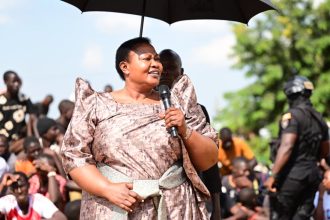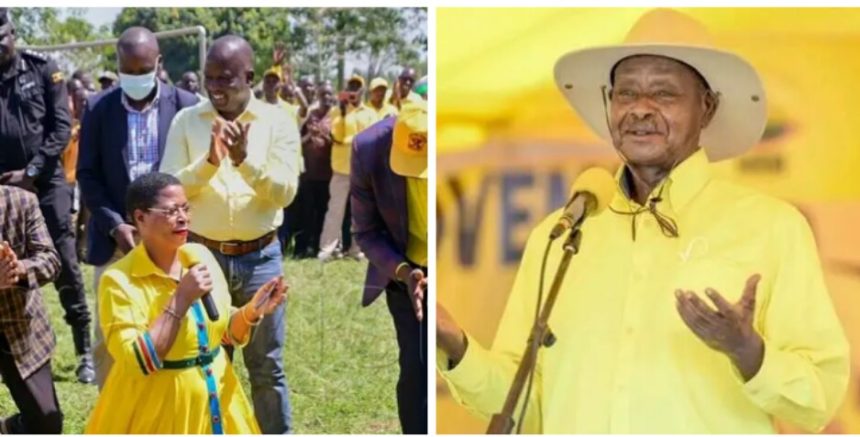
Ugandans across the country are reacting with shock and dismay following controversial remarks made by Speaker of Parliament Anita Among during a recent NRM rally. In a statement now widely shared on social media, Speaker Among appeared to liken the ruling party’s leadership to the Holy Trinity of the Christian faith—an analogy many citizens and religious leaders have deemed deeply offensive.
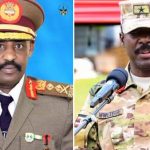
“We believe in God the Father, and God the Father is President Museveni. The Son is MK (Gen Muhoozi Kainerugaba), and the NRM supporters are the Holy Spirit,” Among reportedly told jubilant NRM supporters during the rally. The comment has since drawn strong condemnation from various sections of Ugandan society.
Religious leaders, in particular, have criticized the Speaker’s remarks as blasphemous and insensitive to Uganda’s largely Christian population. “It is inappropriate to compare political figures, however respected, to God. Such statements undermine the sanctity of faith and risk dividing the country on religious grounds,” said Rev. David Mugisha, a prominent Anglican cleric in Kampala.
Social media platforms like X (formerly Twitter) and Facebook were flooded with criticism under the hashtag #AnitahAmong, with many Ugandans accusing the Speaker of **mocking God and calling for a public apology.
Political analysts argue that Among’s remarks also reflect the growing cult of personality within the ruling NRM party, where loyalty to individuals appears to be elevated over institutional values. “Comparing Museveni to God and MK to a goddess is troubling and sets a dangerous precedent in a democratic society,” said political analyst Sarah Kintu.

This is not the first time Ugandan politicians have drawn controversy by invoking religious symbolism to praise leaders. In previous years, similar remarks have sparked debates about the separation of church and state and the need for leaders to exercise caution in their public statements.
As of this morning, neither Speaker Anita Among nor the NRM Secretariat had issued an official clarification or apology.

With general elections drawing nearer, political rhetoric is expected to intensify. However, many citizens are urging leaders to maintain respect for religious values and avoid statements that could inflame public sentiment.