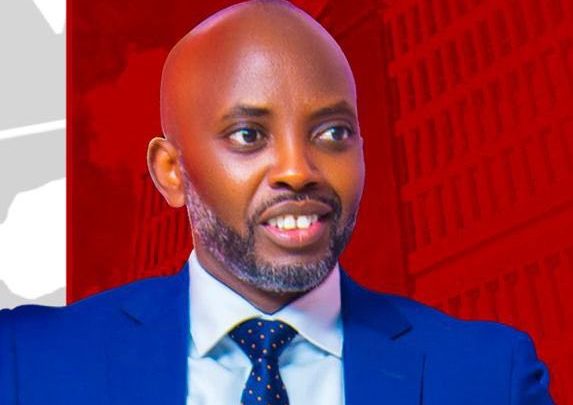

KAMPALA, Uganda — The nomination of Victoria University Vice Chancellor Dr. Lawrence Muganga as Minister of State for Internal Affairs has hit a major obstacle after Parliament’s Appointments Committee reportedly declined to approve his appointment over concerns regarding his citizenship status.
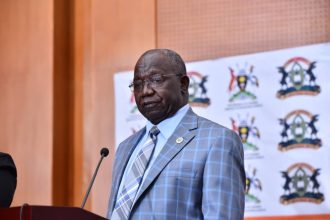
The development emerged on Monday when Deputy Speaker Thomas Tayebwa, speaking on behalf of the Appointments Committee, disclosed that out of 82 ministerial nominees vetted by the committee, 80 had been approved, one had not yet appeared before the committee, and another had raised issues that would be referred back to the appointing authority.
“We have approved 80 out of the 82 ministerial nominees. One is still pending because he has not yet appeared before the committee, and another one we found issues, which we are going to communicate to the appointing authority to look into, and then they are going to take the final say,” Tayebwa told journalists.
Although he did not name the affected nominee, sources familiar with the vetting process identified the candidate as Dr. Lawrence Muganga, whose appointment has recently attracted public scrutiny over allegations of multiple citizenship.
According to sources who attended the closed-door vetting session, the committee’s due diligence process established that Muganga had links to Ugandan, Canadian and Rwandan citizenship. Members of the committee reportedly sought evidence that he had formally renounced any foreign citizenships that could conflict with legal requirements for ministerial office.
Sources said the committee was satisfied with explanations regarding his alleged Rwandan citizenship but remained unconvinced by the documentation presented concerning the renunciation of other citizenships.
“The committee took time to examine the matter because Internal Affairs is a sensitive ministry dealing with citizenship, immigration, passports and national identification,” a source familiar with the proceedings said.

The controversy has reignited debate over Uganda’s dual citizenship laws, particularly provisions within the Uganda Citizenship and Immigration Control Act that restrict holders of dual citizenship from occupying certain public offices.
During the same briefing, Tayebwa revealed that the committee had encountered several nominees facing similar citizenship-related concerns but noted that most had successfully presented evidence showing they had formally renounced their foreign citizenships.
“We did a verification with the Ministry of Internal Affairs and we discovered that we had three colleagues who had dual citizenship and one colleague who had multiple citizenship,” Tayebwa said.
“We have looked at it extensively and four of them had records renouncing their citizenship in the other countries.”
He praised those nominees for making what he described as a difficult but patriotic choice.
“They have taken a step of choosing Uganda above all. Especially painful decisions. Some of these people have families in those countries. Whatever they make from those countries, they send back to Uganda. But they took the painful decision of renouncing those countries, so we considered that and appreciated them for being patriotic,” he added.
Sources indicated that among the nominees who successfully addressed the committee’s concerns were Foreign Affairs Minister-designate Adonia Ayebare and ministerial nominee Calvin Echodu, who reportedly presented documentation confirming the renunciation of foreign citizenships.
Muganga, however, has previously acknowledged holding both Ugandan and Canadian citizenship, maintaining that possessing another nationality does not diminish his commitment to Uganda.
“Before I came here, I definitely had two citizenships — that’s the Ugandan citizenship and the Canadian citizenship,” Muganga told reporters after appearing before the committee.
“Many Ugandans do that. But that does not take away one’s love for the country. I am Ugandan. Uganda is my country.”
The committee’s findings are expected to be formally communicated to President Yoweri Museveni, who will determine the next course of action regarding the nomination.
If the committee’s decision is upheld, it would represent one of the most significant setbacks suffered by a cabinet nominee during the current vetting process and is likely to fuel further debate over the interpretation and application of Uganda’s dual citizenship laws.