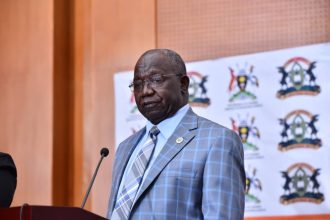
Gulu, Uganda – Minister of Justice and Constitutional Affairs, Norbert Mao, has called on policymakers to ensure that regulations do not hinder innovative transformation in Uganda, warning that restrictive rules could stall the country’s economic progress.
Speaking at the opening of the 7th Annual Higher Education Conference in Gulu, Mao emphasized that innovation is no longer optional for tertiary institutions but essential for Uganda’s economic transformation. He urged university leaders to design curricula that respond to market needs and continuously adapt to societal demands.
Mao also praised Parliament for passing the Copyright and Neighbouring Rights Amendment Bill, which will allow creatives to benefit from their work. He pledged that his ministry would take strong action against any violations of intellectual property, highlighting the central role of innovation in driving economic growth.
The conference, which brings together vice chancellors, researchers, and policymakers, focused on integrating innovation into higher education to accelerate economic transformation. While there is widespread interest in embracing competence-based curricula, participants noted that limited funding remains a major obstacle for institutions seeking to implement practical skills in entrepreneurship, digital innovation, research, and technology.
Key recommendations from academics included:
- Establishing high-quality laboratories and well-resourced incubation centers with expert trainers.
- Fostering partnerships between innovators and industries to commercialize ideas.
- Supporting private higher education institutions in competitive innovation.
- Ensuring equal opportunities for students in hard-to-reach areas and those with disabilities.
- Creating or strengthening Technology Transfer Offices (TTOs) with transparent intellectual property and licensing policies to reward inventors and enable spin-offs.

Mao emphasized that innovation should focus on solving real problems, such as improving rural electricity access or responding to public health challenges, rather than merely awarding academic degrees. He urged government authorities to observe and support innovators without imposing unnecessary restrictions.
He tasked the National Council for Higher Education with safeguarding innovative ideas from premature policy intervention, allowing students to fully realize their potential through market-relevant curricula. The minister also stressed collaboration among stakeholders to drive inclusive growth and improve student employability.

Highlighting Uganda’s intellectual property framework, Mao noted the importance of the Patents Act, Copyright Act, and Trademark Act in enabling innovators to monetize their inventions through licensing agreements.
The conference will continue until Friday, with delegates expected to devise strategies for fully integrating the competence-based curriculum into tertiary education and strengthening Uganda’s innovation ecosystem.