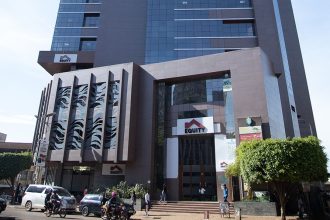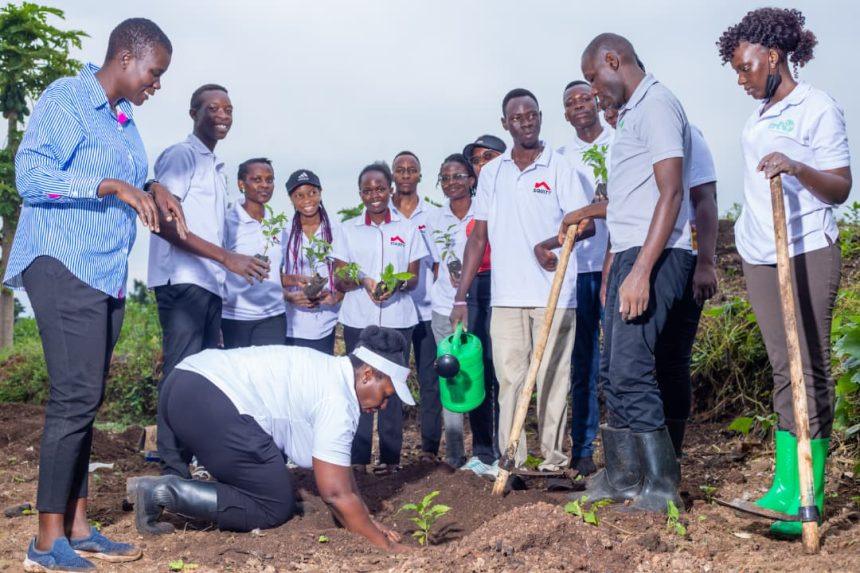
Equity Bank Uganda, in partnership with the Umukuka wa Bugisu, the cultural leader of the Bamasaba and Gro Foundation, has launched a major tree planting initiative aimed at decarbonizing dumping sites and promoting environmental conservation in the Bugisu subregion.
The project, which covers eight acres around the major dumping site in Mbale City, will involve the planting of trees that act as natural carbon sinks, helping to keep the city green, safe, and resilient to the impacts of climate change. The initiative also aims to prevent disasters similar to those experienced at the Kitezi landfill in Kampala.
Under this collaboration, Equity Bank will provide Shs60 million in financing, while Gro Foundation—a nonprofit organization focused on reforestation—will offer technical expertise to ensure that native tree species are planted, nurtured, and monitored for long-term sustainability.
The tree planting exercise was officially launched on Saturday by the Umukuka, during celebrations marking his two-year anniversary as head of the Bugisu Kingdom. By the end of 2026, the partners aim to plant 60,000 trees across the region.
Speaking at the event, Virginia Ssemakula, Equity Bank’s Manager for Energy, Environment, and Climate Change, said the bank’s commitment goes beyond traditional banking.

“At Equity, we believe it is our responsibility to go beyond banking. That’s why we are heavily invested in energy and environmental initiatives,” she said. “We are investing in healthier communities and a more sustainable future, reflecting our vision of growing not only financial prosperity but also environmental resilience.”
Lydia Apeduno, the Mbale City Council Composite Manager, noted that trees planted around landfills would help reduce carbon emissions.

“Dumping sites often emit gases such as carbon dioxide. These trees will help in carbon reduction and also act as demarcations to prevent encroachment,” she said.
The program will also support the people of Bugisu in achieving agricultural and socio-economic transformation, while helping to mitigate recurring mudslides in the region.
Trees are expected to improve soil health, conserve water, and strengthen farm resilience against climate change, while also providing farmers with food, fodder, and additional income sources.
Laban Musiguzi, from Gro Foundation, highlighted the broader benefits of agroforestry:
“Integrating trees into farming systems helps control soil erosion, manage pests and diseases, and create a more diverse and productive ecosystem,” he said. “This is not just about planting trees, but about planting hope, securing the environment and protecting the climate for generations to come.”
The event reaffirmed Equity Bank’s commitment to environmental protection and sustainable development. The initiative is part of the bank’s Environmental, Social, and Governance (ESG) strategy, which integrates sustainability into its core operations. Equity Bank has set a national target to plant 35 million trees by 2026.