If there is any other institution that should be accorded medals for participating in bringing peace and sanity to the Karamoja region, Matany Hospital should be on the list.
This hospital, for those who witnessed when the Uganda government launched the disarmament exercise in the Karamoja region, can testify to what it did.
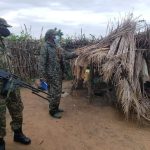
In 2001, when the Uganda government launched the disarmament exercise, there was a lot of fighting between the UPDF soldiers and Karimojong warriors who resisted handing over their guns to the government. In the process, many Karimojong warriors and UPDF soldiers lost their lives. Those who were critically injured were rushed to the only Matany Hospital.
Every day, about 40 wounded Karimojong warriors and UPDF soldiers would be taken to Matany Hospital either by relatives of the warriors or the Uganda Red Cross Society, while the army was also responsible for transporting their wounded soldiers to the same hospital.
John Lomuria, one of the warriors who was shot and injured, recalls how he was rushed to Matany by the Uganda Red Cross Society and saw the number of soldiers also admitted to the wards.

Talking about Matany, what about it?
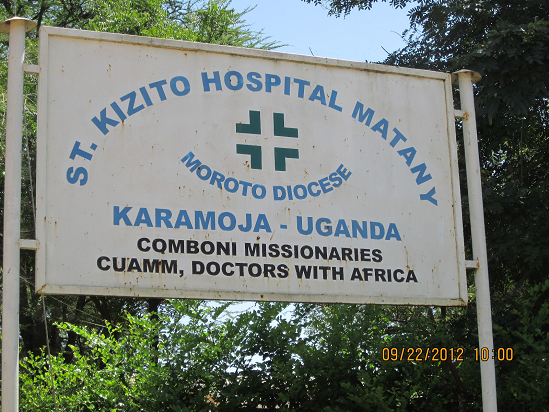
Matany Hospital, located in Napak District in the Karamoja sub-region in northeastern Uganda, is a Catholic-founded hospital built at the beginning of 1966 to provide health services to the people of Karamoja, since there was no health facility in the region by then. The hospital was run with funds from Italian NGOs called CUAMM (Doctors with Africa).

The hospital started as a dispensary in 1970 and was managed by the Comboni Sisters. At the time of its extension to a hospital, it had only 220 beds. In 1984, the hospital introduced a nursing training school, and in 1985, Primary Health Care (PHC) activities were introduced throughout Bokora County in Napak District.
Matany Hospital acts as a referral hospital for the seven districts within the Karamoja sub-region.
The hospital has several wards and services, including the outpatient department, surgical, medical, paediatric and TB wards, antenatal care, laboratory, X-ray, ultrasound scan, dental care and physiotherapy unit, among others.
Brother Nahrich Guntha, the hospital administrator, said the hospital was full of wounded soldiers and Karimojong cattle rustlers.
“We treated all the wounded people equally with our motto, ‘We dress the wounds and God heals,’” he said.
Apart from saving the lives of wounded Karimojong warriors and UPDF soldiers, Matany Hospital also participated in bringing together the Karimojong and the Iteso in Soroti.
When the Karimojong crossed in huge numbers to rustle cattle in the Teso region between 1985 and 1989, no one believed that at any time the two communities, who are actually related according to history, would come together because the raids left wounds in the hearts of the Iteso, who call the Karimojong uncles.
The Iteso had no guns and could not defend themselves against the armed Karimojong. Instead, they would run away, fearing them, leaving their cattle behind while saying, “Omeyasi esi akosi kituk konye Ejeni Edeke” in Ateso, meaning, “It is okay you take away our animals, but God knows.” Since then, the Iteso developed bitterness against the Karimojong, who are their uncles.
At that time, no Karimojong could use the Moroto–Kampala road via Soroti. If he or she happened to travel, they would not come out of the bus to buy water or eat because their identity was known by everybody. With that anger, the Iteso would not hesitate to carry stones to attack that Karimojong instantly.
That anger continued to the extent that no Iteso man or woman was allowed to marry any Karimojong. In case any boy tried to fall in love with a Karimojong girl and the elders got to know, that boy would be subjected to cleansing.
Some 15 years back, Soroti District Local Government in the Teso region advertised district positions. The adverts were pinned on all the notice boards of the district, but it was written that all Iteso applicants were invited except Karimojong, who were not accepted. This showed the hatred the Iteso had against the Karimojong.
Although the Karimojong had no bitterness against the Iteso, and many of them, especially the elite, appealed to the Iteso that the people who committed atrocities were elderly and many had died, while others were no longer active, that appeal could not please an Iteso.
Several NGOs tried to bring the two communities together, but their efforts did not yield good results until recently when the Iteso realized that Matany Hospital, located in Karamoja, was the best hospital with powerful machines that can detect many illnesses in the human body and provide effective treatment.
This good service at Matany Hospital forced the Iteso to reconsider and begin rebuilding relations with the Karimojong, gradually forgetting the past.
Mr John Lokol, one of the elders and a resident of Lorengechora, concurred that if Matany Hospital had not provided good services that attracted the Iteso, the Iteso could have continued hating the Karimojong.
“As we are speaking right now, my son has married an Ateso girl from Kumi, yet in those days the Iteso people could not allow their daughters to be married in Karamoja,” he said.
Mr Joseph Lomonyang, the District LCV Chairperson of Napak, said Matany Hospital cemented the reconciliation between the people of Teso and the Karimojong.
He said the development started when the Iteso frequently crossed to seek medical attention at Matany Hospital.
“Right now these two communities are living together, cultivating together, and nobody is talking about what happened in the past,” he said.
Mr Lomonyang added that apart from Iteso being in Karamoja, the Karimojong have also crossed to Teso, and many of them have cultivated crops there, while others are looking after cattle of the Iteso.
Grace Akol, one of the patients attending to her sick child at Matany and a resident of Kyere Sub-county in Serere District, said the hospital has polite doctors who do not harass patients.
“I was in Soroti Hospital for two months attending to my baby, but I saw the situation was not getting better until I requested to be referred to Matany Hospital. Now I have only spent two weeks here, but the child is eating and sometimes plays with the doctors,” she said.
Mr Joseph Okolimong, a TB patient and a resident of Ongino in Kumi District, currently receiving treatment at Matany, hailed the doctors, saying they care for people since most doctors working at the hospital are white missionaries.
“The hospitals we bypassed in Teso are also well equipped, but in terms of service we like Matany Hospital because when you are at Matany, spiritually you get healed,” he said.
Brother Nahrich, the hospital administrator, said about three-quarters of the patients who receive services at the hospital are from the Teso region, while others are from Sebei and Lango.
The hospital supervises 11 lower-level health units in Napak District, more than 100 traditional birth attendants, and 420 Village Health Team members.
According to Dr John Bosco Nsubuga, the former hospital medical superintendent, during the financial year 2013–2014, Matany Hospital handled a total of 33,074 patients from various regions such as Bugisu, Teso, Lango, and Sebei in the outpatient department.
However, Nsubuga said the number of patients varies. During the rainy season, the number tends to increase.
In the last two years, the hospital provided the following services: 35,950 children immunized; 5,006 mothers received antenatal care; 9,290 patients admitted to the wards; and 1,060 births, with an average of three deliveries per day.
However, Brother Gunther said although patients love the services the hospital provides, it is facing a major funding challenge that has forced it to suspend some services.